


source:other news
release time:2023-09-04
Hits:0
Popular:
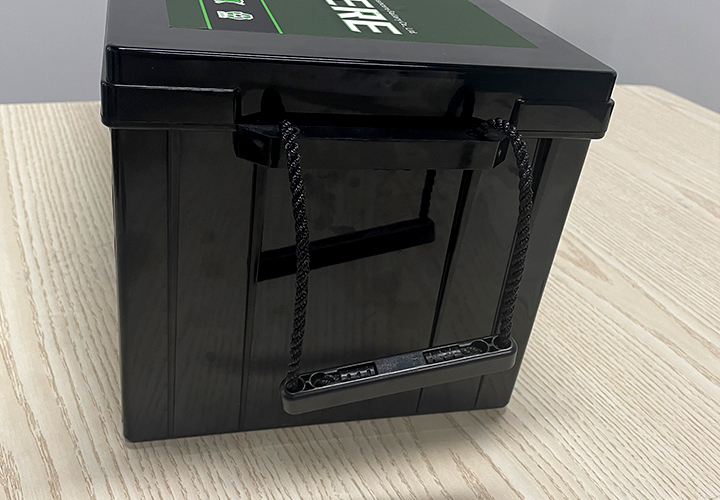
Lithium polymer batteries have been widely developed and studied as a rechargeable, high specific energy device. These batteries are composed of lithium or carbon negative electrodes (anodes), corresponding high potential embedded positive electrodes (cathodes), a polymer electrolyte. Due to the application of polymer electrolytes, it is possible to develop a battery with higher safety and the ability to twist and deform at will. The main requirements for the performance of polymer electrolytes in lithium-ion batteries are high ion conductivity, stable electrochemical and thermal properties, flexible mechanical properties, and high mechanical strength. The main parameters that characterize the performance of electrolytes include ion conductivity, electrochemical stability window, and lithium ion migration number.
To improve the ion conductivity of polymer battery electrolytes, it can be achieved by increasing the number of charged particles in the polymer and the migration rate of charged particles. Lithium salts such as LiCIO, LiBF4, LiN (CFaSOz) 2, LiSCN, LiC, and Coa generally have high ionic conductivity in polymers with high dielectric constants due to their low dissociation energy. The use of composite carbon electrodes and AMS based colloidal polymers as electrolytes in lithium-ion batteries has shown excellent performance.
Increasing the migration rate of charged particles can also improve the ion conductivity of polymers while maintaining their dielectric constant. The more lithium salts dissociate into free ions in the electrolyte, the faster the ion migration, the higher the conductivity, the larger the dielectric constant of the solvent, the smaller the electrostatic interaction between lithium ions and anions, and the more free ions there are. But solvents with high dielectric constants also have high viscosity, which can actually slow down the migration rate of ions.
For solutes, as the concentration of lithium salts increases, the conductivity increases, but the electrolyte viscosity also increases accordingly; In addition, the larger the radius of anions in lithium salts, the smaller the lattice energy, and the easier the lithium salts are to dissociate, but the viscosity also increases accordingly. Due to the interaction of the above factors, the maximum value of conductivity in a specific electrolyte is generally between 1.1-1.2 mol • I lithium salt concentration. Therefore, a solvent with a high dielectric constant can be mixed with one or several solvents with low viscosity, and the electrolyte with higher conductivity in polymer lithium-ion batteries can be obtained by adjusting the ratio (volume ratio) of each component.
Read recommendations:
lithium deep cycle marine battery maker
deep cycle trolling motor battery
Explosion Proof Rechargeable Lithium Special Battery Cell 26650 32700
The working principle of iron lithium batteries.solar generator amazon

Last article:What conditions should lithium-ion batteries from lithium-ion battery manufacturers meet in terms of safety performance?lithium batteries for solar panels
Next article:What are the common sense introductions in the use of low-temperature batteries?
related suggestion
lithium trolling motor battery maker
2023-03-22lithium boat batteries
2023-03-22lithium trolling motor battery wholesale
2023-03-22lithium batteries for solar panels Production
2023-03-22lithium deep cycle marine battery wholesale
2023-03-22lithium deep cycle marine battery price
2023-03-20trolling motor battery
2023-05-08solar energy storage
2023-05-08marine battery for trolling motor
2023-05-08solar generator for home
2023-05-0824 volt deep cycle battery
2023-05-08solar powered battery pack
2023-05-08Customizable LiFePo4 Battery for AGV Robot 60V 72V
2023-02-0914.4kWh 28.8kWh 100kWh Sodium Ion Battery Energy Storage SIB Pack System
2024-07-0512V 150Ah 200Ah LiFePo4 Motive Battery Pack for Clean Car Electric Vehicle
2023-02-14Forklift LiFePo4 Battery Pack 12V 100Ah 200Ah
2022-09-19Hysincere 500W Portable Power Station Solar Powered
2022-09-09Do you want to use the newly purchased lithium battery after activation?
2022-11-09A Complete Guide to 16V Lithium Batteries
2025-03-12The main hazards of 3c lithium-ion batteries are.portable power station for camping
2023-09-04Monocrystalline silicon battery.lithium battery 12v 100ah
2023-07-07Everything You Need to Know About 51.2V Lithium Batteries
2025-03-12Affects the time of drone battery life.best deep cycle marine battery
2023-05-12How to distinguish the battery cells of A, B, and C lithium batteries.best portable solar generator
2023-08-02Vanadium battery and lithium battery in the end which good?
2022-11-01Lithium battery pack process.12 volt deep cycle marine battery
2023-08-01Are Lithium-ion batteries safe
2022-10-11 info@hysincere.com
 Sales manager: Mr.Liu
 Contact number: +86 134 1879 9682
 Headquarter: Room 611, Building D, Bantian International Center, No.5 Huancheng South Road, Bantian Street, Longgang District, Shenzhen, China
China Factory: No.2 Building, Yihengda Technology Industrial Park, Long Jiang 2nd Road, Qingxi Town, Dongguan, China
Vietnam Factory: 4th Floor, Chelsea Residences Tower, No.48 Tran Kim Xuyen,Cau Giay District, Ha Noi City, Vietnam











 中
中
