
A lithium-ion secondary battery (rechargeable lithium battery) is a highly efficient energy storage device that has revolutionized modern technology. It typically consists of an electrode assembly, a protective container, and an electrolyte. The electrode assembly includes two electrodes with opposite polarities separated by an advanced porous membrane separator.
Advanced Separator Technology
In high-performance secondary batteries, the separator often features a porous membrane containing engineered ceramic particle clusters. This porous film is formed by bonding these clusters with a specialized adhesive. Each particle cluster is meticulously formed by sintering, or by dissolving and recrystallizing ceramic particles. Because these ceramic materials possess a specific band gap and excellent thermal resistance, they drastically improve the safety and structural integrity of the battery.
The Evolution of Chemical Batteries
A chemical battery is a device that directly converts chemical energy into low-voltage direct current (DC) energy. The history of the battery spans over 200 years, dating back to Alessandro Volta’s invention in 1800. Prior to World War II, the market was dominated primarily by zinc-manganese dry cells and heavy lead-acid batteries.
Following the post-war technology boom in aerospace, mobile communications, and consumer electronics, the global demand for high-energy storage batteries skyrocketed. Because lithium has the lowest atomic mass and the highest electrode potential among all metal elements, batteries utilizing lithium exhibit exceptional characteristics, such as a high open-circuit voltage and a massive specific capacity.
The Rise of Lithium-Ion Secondary Batteries
In the 1970s, scientists developed the first disposable (primary) lithium batteries. By 1990, Sony launched the world’s first commercial lithium-ion secondary batteries. Driven by the rapid expansion of mobile communications and laptops, lithium-ion technology quickly replaced older nickel-cadmium (Ni-Cd) and nickel-metal hydride (NiMH) batteries as the premier high-energy power source.
Today, the specific capacity and cycle life of commercial lithium-ion batteries far exceed early industry projections, frequently surpassing thousands of charge cycles. This technology has expanded beyond small consumer electronics into heavy-duty electric vehicles (EVs) and grid-scale energy storage. Furthermore, innovations like solid polymer and ultra-thin plastic lithium-ion batteries are continuously entering the market, pushing the boundaries of lightweight, high-density energy storage.
Source Next-Generation Lithium Batteries with Hysincere
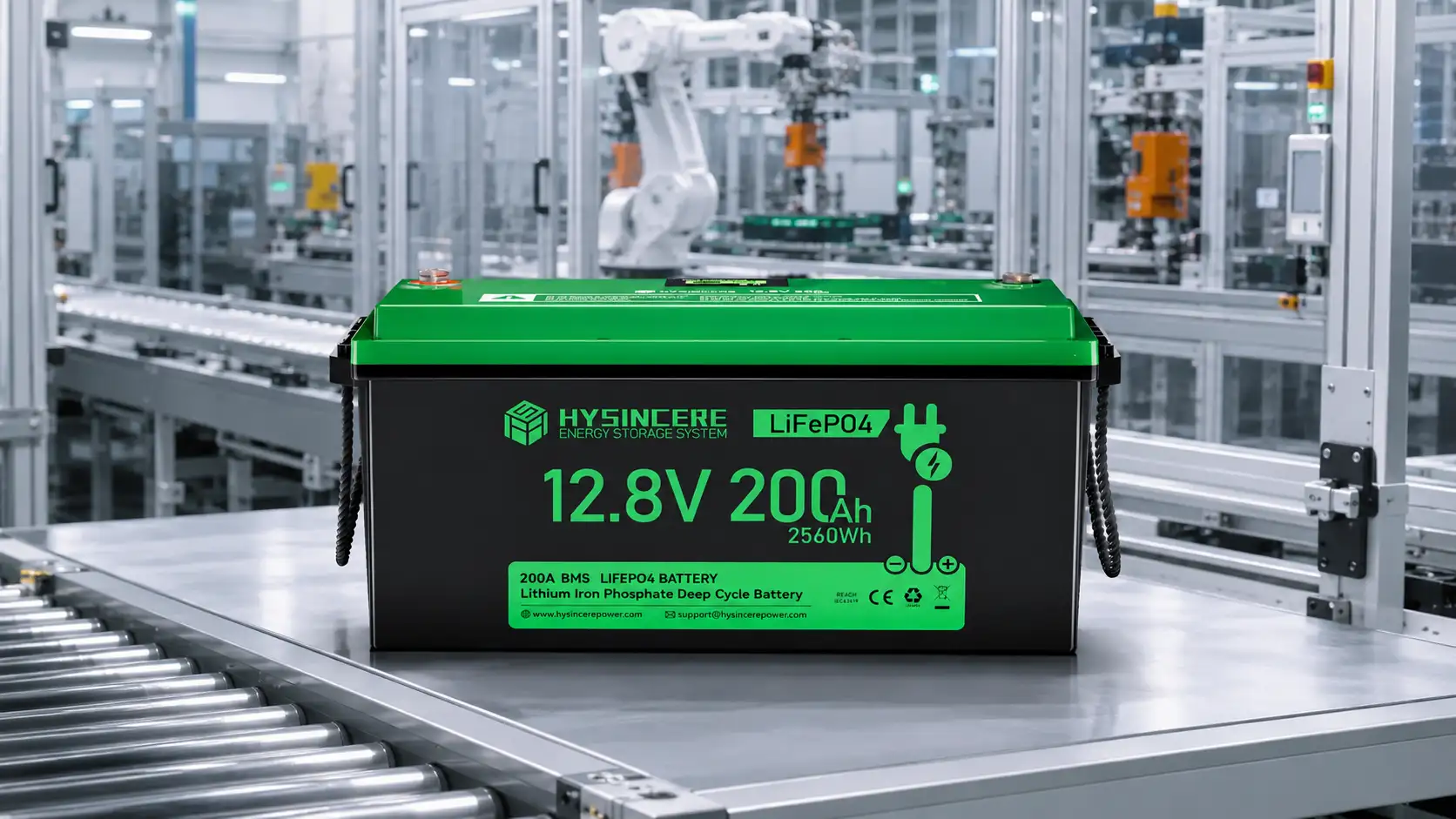
As the evolution of secondary batteries continues to accelerate, partnering with a cutting-edge manufacturer is vital. At Hysincere, we utilize the latest advancements in battery chemistry and robust separator technology to manufacture premium lithium-ion and LiFePO4 battery cells. Whether you are engineering electric vehicles, smart devices, or large-scale energy storage systems, Hysincere provides the advanced, reliable, and safe battery solutions your industry demands.
Discuss Your Battery Project Requirements
Share the application, voltage, capacity, load, charging method, dimensions, temperature, certification, and annual-volume requirements for an initial technical review by Hysincere.
An Introduction to Lithium Secondary Batteries: Structure and Evolution FAQ
What does this guide explain about an introduction to lithium secondary batteries: structure and evolution?
A lithium-ion secondary battery (rechargeable lithium battery) is a highly efficient energy storage device that has revolutionized modern technology. It typically consists of an electrode assembly, a protective container, and an electrolyte. The electrode assembly includes two electrodes with opposite polarities separated by an advanced porous membrane separator.
Advanced Separator Technology?
In high-performance secondary batteries, the separator often features a porous membrane containing engineered ceramic particle clusters. This porous film is formed by bonding these clusters with a specialized adhesive. Each particle cluster is meticulously formed by sintering, or by dissolving and recrystallizing ceramic particles.
The Evolution of Chemical Batteries?
A chemical battery is a device that directly converts chemical energy into low-voltage direct current (DC) energy. The history of the battery spans over 200 years, dating back to Alessandro Volta's invention in 1800. Prior to World War II, the market was dominated primarily by zinc-manganese dry cells and heavy lead-acid batteries.
This article is intended for technical reference and preliminary project evaluation. Battery compatibility, charging limits, current capability, temperature range, BMS behavior, certifications, and installation requirements vary by model and application. Final selection and system configuration must follow the selected product datasheet, equipment-manufacturer requirements, and system-validation results.