A lead-acid-to-LiFePO4 conversion should not begin with Bluetooth, an LCD, or self-heating. It should begin with the system requirements: operating voltage, usable energy, continuous and peak current, charging sources, installation space, ambient temperature, and required documentation. Once these requirements are clear, selecting the right feature configuration becomes much easier.
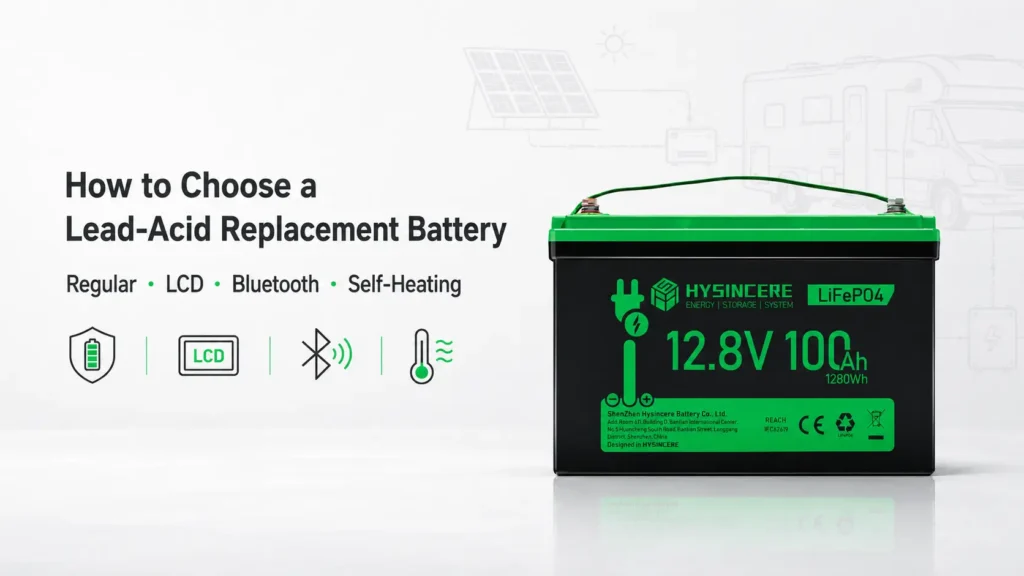
For most projects, a regular LiFePO4 battery is the appropriate baseline. Choose an LCD version when operators need to view battery status at the equipment without using a phone. Choose Bluetooth when installers or service teams need convenient short-range access to operating data. Consider self-heating when the battery must charge in cold conditions that may place the cells below the model’s permitted charging temperature. The final feature package must still be confirmed for the exact model.
The answer: select the electrical platform first, then the feature configuration
Hysincere’s current LiFePO4 lead-acid replacement battery range includes Regular, Smart LCD, Bluetooth, and Self-Heating versions. This structure reflects the actual procurement sequence: first identify a compatible battery platform, then select the local display, mobile monitoring, or cold-weather feature required by the application.
The order matters. A Bluetooth app cannot make an undersized BMS suitable for a motor-starting surge. An LCD cannot correct an incompatible charger. Self-heating cannot compensate for the wrong system voltage. Before comparing features, complete the electrical checks in a lead-acid-to-LiFePO4 conversion review.
Procurement rule: confirm system voltage, usable energy, current capability, charging compatibility, mechanical fit, and environmental limits before selecting display, connectivity, or cold-weather features.
Regular vs. LCD vs. Bluetooth vs. Self-Heating
| Version | Best suited for | Main value | What to confirm before purchase |
|---|---|---|---|
| Regular | Standard replacement projects with separate system monitoring or simple operating requirements | Keeps the specification focused on the battery, BMS, capacity, current, fit, and cost | How will operators check state of charge (SOC) and alarms? Is an external battery monitor already installed? |
| Smart LCD | Inspection, handover, and daily operation where status must be visible at the equipment | Provides local battery information without opening a mobile app | Which values and warnings are displayed? Will the screen remain visible and accessible after installation? |
| Bluetooth | Commissioning, maintenance, troubleshooting, and short-range mobile monitoring | Provides convenient access to battery status and operating data through a compatible app | Which data is available? Which mobile operating systems are supported? Is the connection range suitable for the installation? |
| Self-Heating | Applications that still need to charge while the battery is in a cold environment | Uses controlled heating to bring the cells into the model’s permitted charging-temperature range | What starts and stops heating? Where does the heater energy come from? What are the exact charging-temperature limits? |
This table compares functions; it does not mean that every voltage and capacity is available in all four versions. These features are not always mutually exclusive, and some models may combine Bluetooth, self-heating, or other functions. Hysincere’s current category includes 12.8V, 25.6V, and 38.4V platforms, but buyers should confirm the exact model, capacity, BMS rating, dimensions, terminals, communication options, and temperature functions in the latest product documentation.
Complete these four checks before selecting features
1. Match the operating voltage, not just the old battery label
A 12V lead-acid system is commonly evaluated against a 12.8V LiFePO4 platform, but similar nominal voltage labels do not confirm compatibility. Check the equipment’s operating-voltage window, high- and low-voltage cutoffs, charger settings, alternator or DC-DC charging, solar controller, inverter, and any voltage-sensitive controls. Apply the same review process to higher-voltage battery banks.
2. Calculate both Wh and A
Capacity in amp-hours describes stored charge; it does not prove that the battery can support the load. Calculate the required daily energy in watt-hours, then identify continuous current, normal peaks, motor or inverter surge, and peak duration. Confirm both usable energy and the BMS current limits of the exact model. The 12V 100Ah LiFePO4 battery selection guide explains why the same Ah rating can produce different practical results in RV, marine, and solar applications.
3. Review every charging source
Many lead-acid systems use more than one charging source, such as shore power, an alternator, solar, a generator, or an inverter/charger. Record the make and model of each device, then compare its charging stages, maximum current, equalization behavior, temperature compensation, and lithium settings with the selected battery documentation. The existing lead-acid charger compatibility guide covers this review in detail.
4. Verify dimensions and service access
Record the available length, width, and height, as well as terminal orientation, cable reach, hold-down method, ventilation, water or dust exposure, and service clearance. For an LCD model, confirm that the display remains visible after installation. For Bluetooth, consider the enclosure and actual connection distance. For self-heating, confirm that the installation and charging source can support the heating-and-charging sequence specified for the exact model.
When the Regular version is the better choice
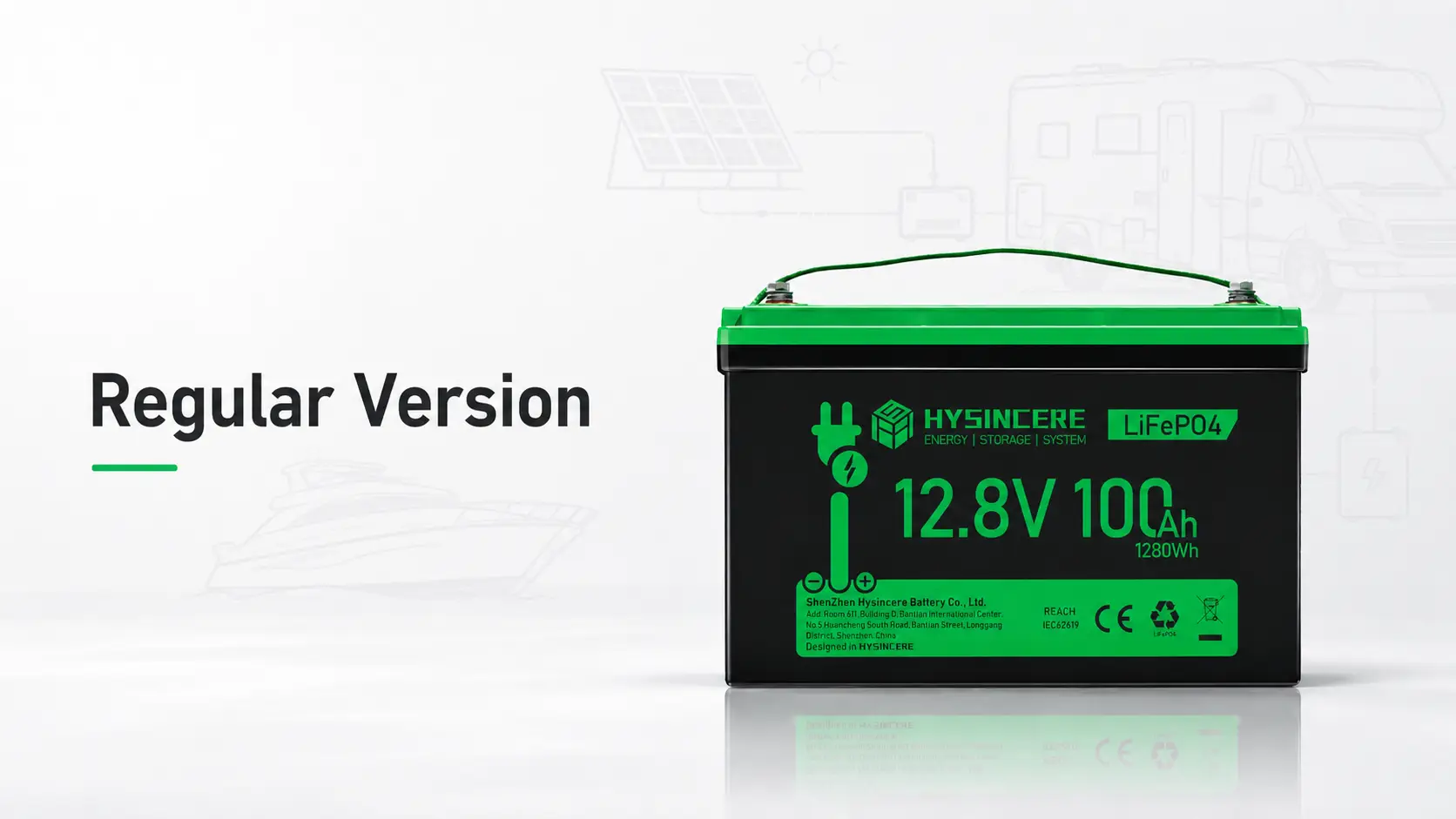
Regular does not mean incomplete. It may be the most practical option when the system already has a suitable shunt-based battery monitor, control panel, or energy-management system, or when operators only need straightforward battery operation. In these projects, adding another interface may increase cost and training requirements without solving a real operating problem.
A Regular version is often suitable when:
- the installation already has reliable system-level monitoring;
- the battery compartment is rarely accessed;
- the customer does not require phone-based diagnostics;
- the project always operates within the model’s permitted charging-temperature range; and
- the purchasing priority is a correct electrical specification and a repeatable standard configuration.
The key question is not whether a Regular battery has fewer visible features. It is whether the project already has a complete method to check SOC, diagnose protection shutdowns, and plan maintenance. If it does, the Regular version may be the most appropriate solution.
When an LCD adds practical value
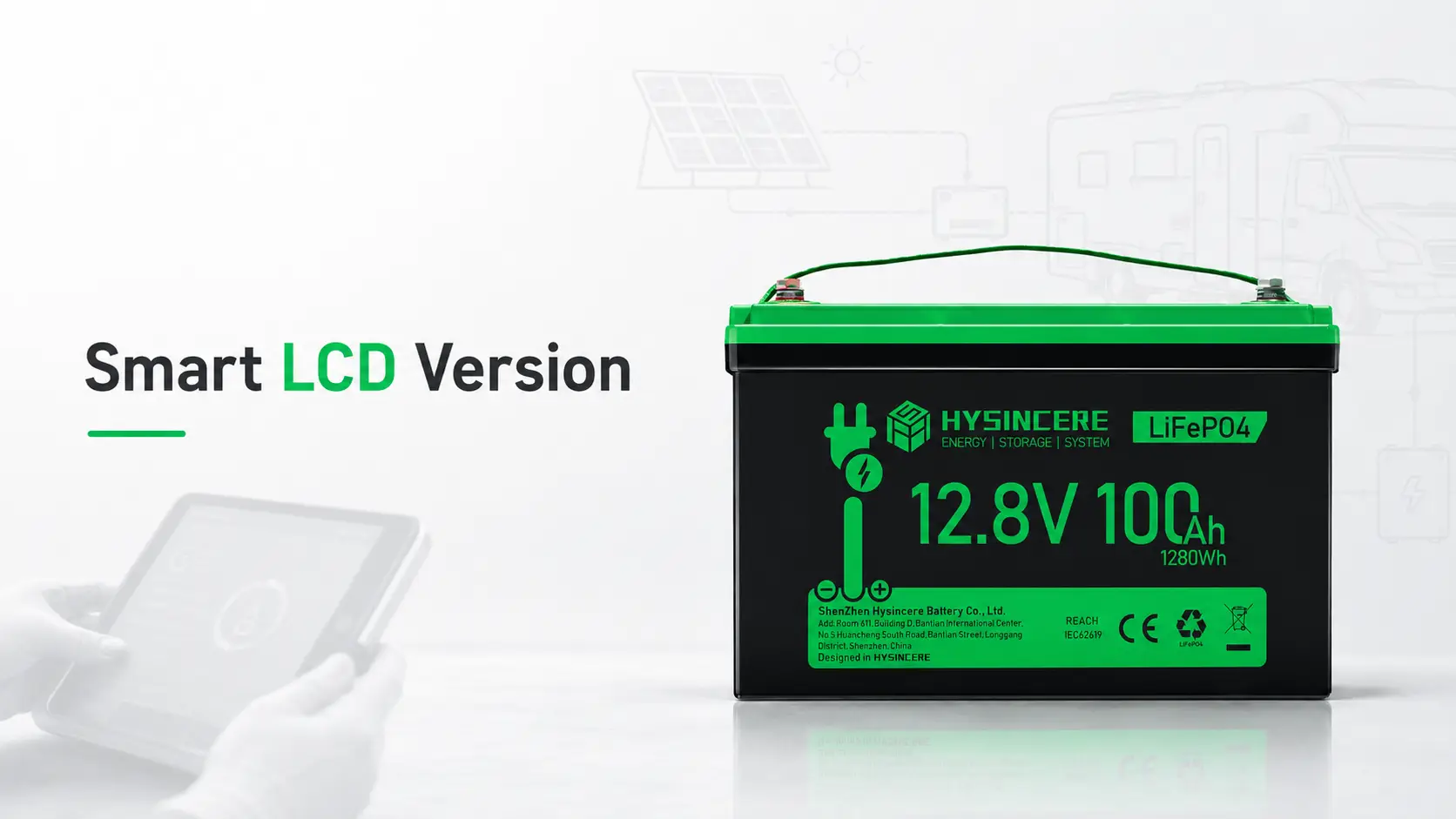
An LCD is useful when someone standing beside the equipment needs a quick battery-status check. Typical examples include rental handover, service inspection, daily equipment checks, and installations where operators should not depend on a specific phone, account, or app.
Before specifying an LCD model, confirm exactly what the screen displays and whether those readings answer the operating question. Voltage alone does not provide an accurate SOC. A displayed capacity or SOC value is only meaningful when its calculation method and initialization requirements are understood. Confirm the available readings, warning indications, refresh behavior, and viewing position for the exact model.
For a deeper comparison of voltage gauges, battery LCDs, BMS app data, and current-counting monitors, see the LiFePO4 battery monitor and SOC guide.
An LCD is designed for local viewing. It can improve usability at the equipment, but it does not automatically provide historical records, remote alerts, fleet dashboards, or complete system-level energy accounting.
When Bluetooth is worth specifying
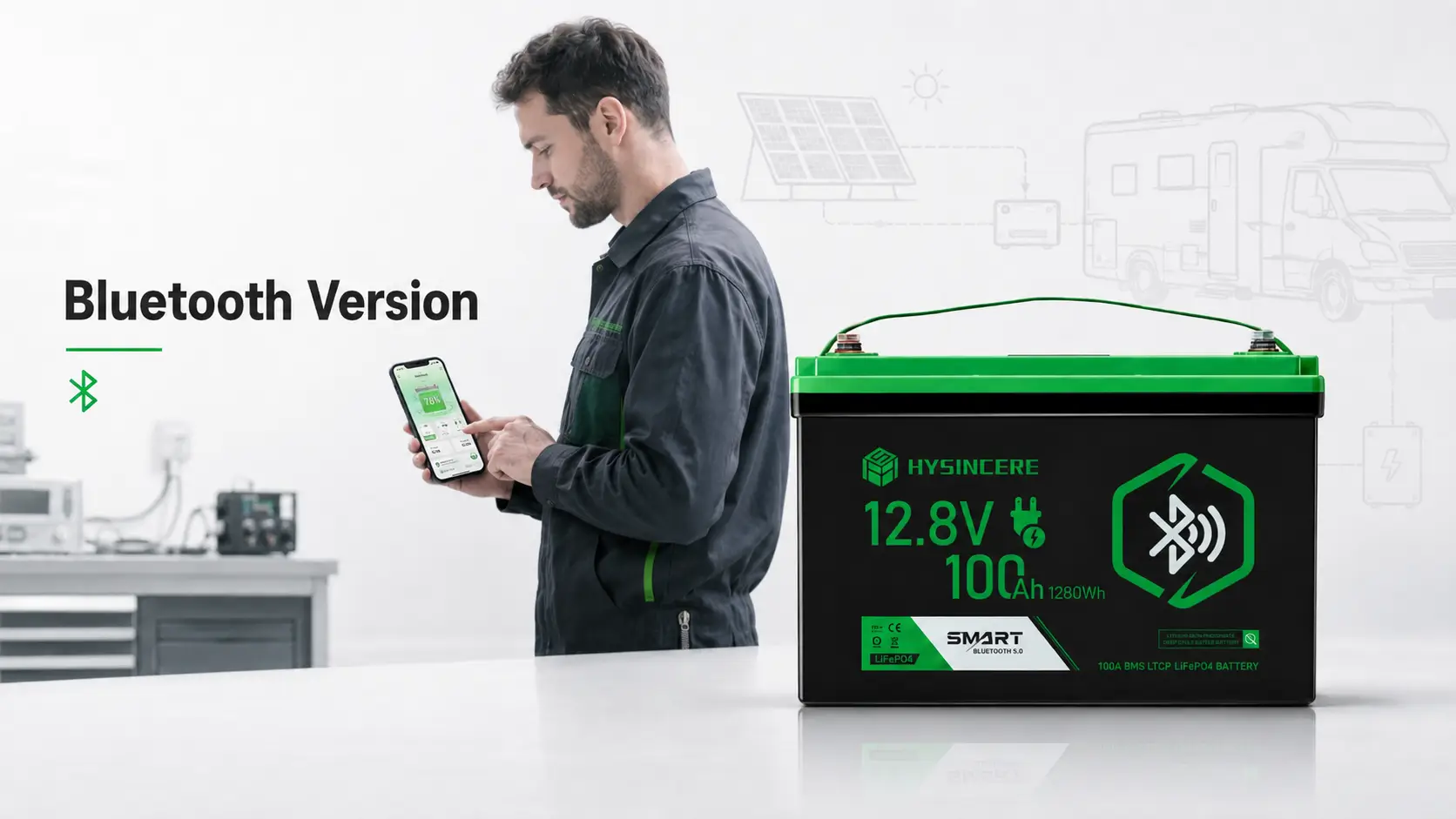
Bluetooth is most valuable during commissioning and service. A technician can review available battery data without removing covers or installing temporary instruments. Depending on the exact product and app, available data may include SOC, voltage, current, temperature, operating status, or protection information.
Bluetooth is normally a short-range connection, not a cloud-based fleet-management system. Check app compatibility, permissions, data export, history, alarms, connection range and software support before choosing it for a project. A separate shunt-based monitor measures current and estimates SOC; a Bluetooth app may instead display the data supplied by the battery BMS. Decide which measurements and records you need, then choose the monitoring method.
Bluetooth is not a substitute for system design. App data can support diagnostics, but cable sizing, fusing, charging control, load protection, and commissioning tests must still be completed separately.
When Self-Heating becomes a project requirement
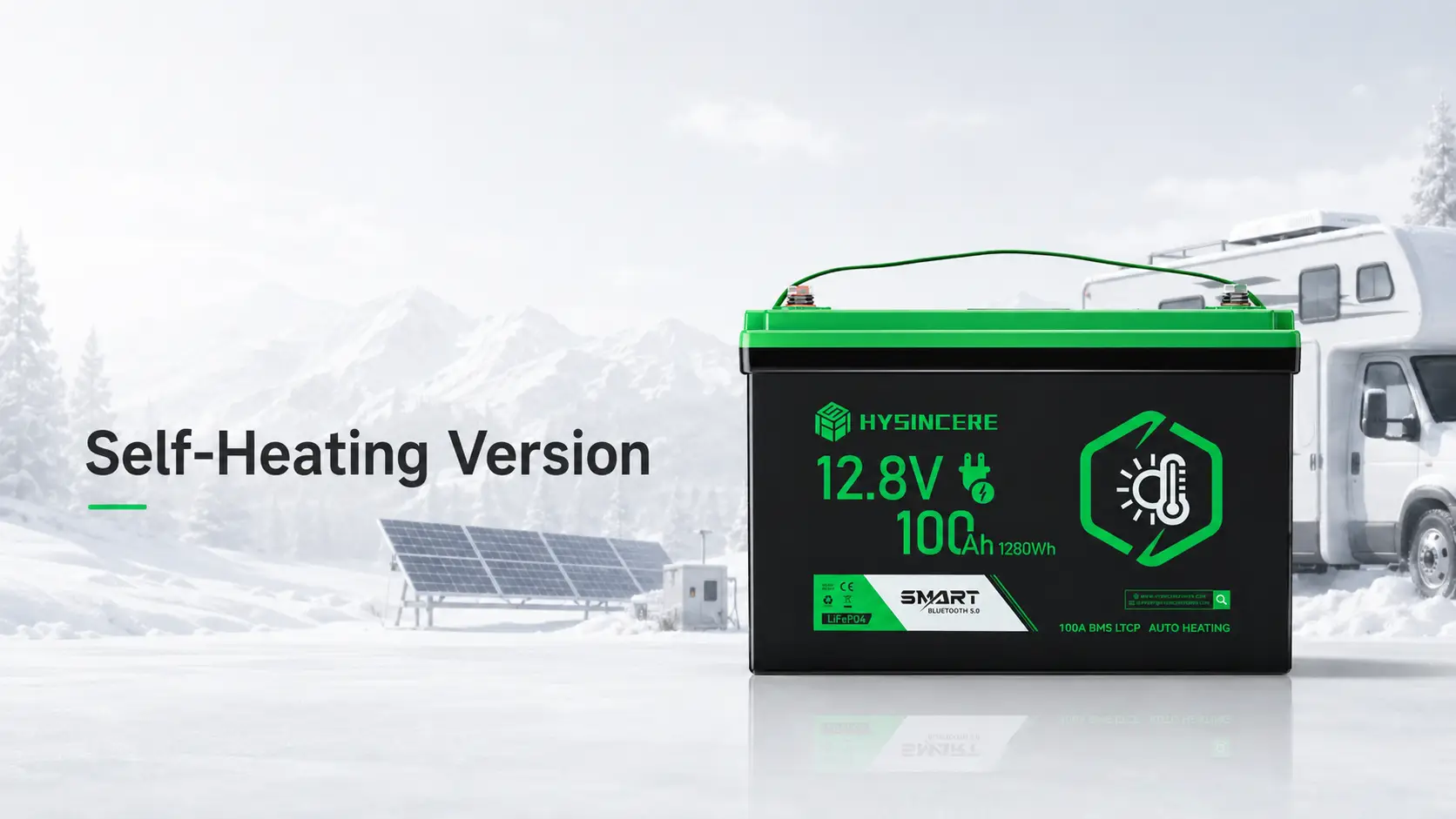
Self-heating is worth considering when a cold battery still needs to accept a charge. Charging limits depend on cell temperature and the battery design, not simply the outdoor temperature. For a Hysincere model, confirm the permitted charging temperatures, when the BMS blocks charging, and how heating allows charging to resume. Use that model’s limits and control logic; do not carry over another manufacturer’s settings.
When requesting a quotation for a Self-Heating model, confirm:
- the minimum battery temperature expected during charging;
- the charging source and current available in cold conditions;
- the heater start, stop, and charge-release logic of the exact model;
- whether heater energy comes from the charger, the battery, or another source;
- how long the application can wait before normal charging begins; and
- enclosure insulation, sensor location, and temperature differences between batteries.
The full engineering boundary is covered in Hysincere’s cold-weather lead-acid-to-LiFePO4 guide. If charging always takes place in a controlled warm environment, self-heating may add limited value. If equipment must resume charging outdoors in winter, it may become a project requirement rather than an optional feature.
A six-step selection process for B2B buyers
- Document the existing system. Photograph the old battery label and record series/parallel wiring, voltage, charger models, loads, protection, dimensions, terminals, and operating environment.
- Define the duty cycle. List the required energy, continuous current, peak current, target runtime, daily cycle count, depth of discharge, and available charging time.
- Approve the battery platform. Confirm voltage, capacity, BMS, charging compatibility, mechanical fit, environmental limits, communication, and required documentation.
- Select the feature configuration. Specify Regular, LCD, Bluetooth, or Self-Heating only when it solves a documented operating requirement.
- Validate the exact model. Review the latest datasheet, dimensional drawing, manual, test documents, and availability before purchase.
- Commission the system. Verify charge settings, protection logic, current, temperature behavior, monitoring, and shutdown recovery under controlled conditions.
What to provide for an accurate lead-acid replacement quotation
To receive an actionable model recommendation and quotation, provide:
- the old battery chemistry, voltage, Ah or reserve capacity, quantity, and wiring diagram;
- equipment type and application;
- continuous load, peak or surge current, and peak duration;
- required runtime and available charging time;
- all charger, alternator, solar-controller, and inverter models;
- available installation dimensions, terminals, cable direction, and hold-down method;
- minimum and maximum operating and charging temperatures;
- LCD, Bluetooth, communication, or remote-monitoring requirements;
- destination market, required documents, expected quantity, and delivery schedule.
The best version is not the one with the longest feature list. It is the version that satisfies the electrical and environmental requirements while giving operators the right way to view battery status. By reviewing the battery platform and feature configuration separately, buyers can compare Regular, LCD, Bluetooth, and Self-Heating options without losing sight of the core requirements of the lead-acid replacement project.
Need the chemistry-level comparison first? Read LiFePO4 vs lead-acid: capacity, cycle life, weight and total cost, then return here to choose Regular, LCD, Bluetooth or Self-Heating features.
Match the Battery Platform Before You Choose the Features
Send Hysincere the old battery label and wiring, system voltage, load and surge current, target runtime, charger models, available dimensions, temperature range, monitoring needs, destination market, and quantity. We will review the project requirements against the appropriate regular, LCD, Bluetooth, or self-heating configuration.
Lead-Acid Replacement Battery Feature FAQ
Is a Bluetooth LiFePO4 battery always better than a regular version?
No. Bluetooth is useful when commissioning or service teams need short-range access to battery data. If the system already has suitable monitoring and operators do not need an app, a regular version may be simpler and more economical. Electrical compatibility remains more important than the interface.
Does an LCD screen give an accurate state of charge?
It depends on the exact model, measurement method, settings, and initialization. Voltage alone is not a reliable state-of-charge method for LiFePO4 across its flat discharge plateau. Confirm what the LCD measures and how the displayed capacity is calculated.
Is Bluetooth battery monitoring the same as remote fleet monitoring?
Usually not. Bluetooth is generally a local, short-range connection. Fleet monitoring may require gateways, wired communication, cloud services, user management, alarms, and data history. State these requirements separately in the RFQ.
Do I need a self-heating battery for every cold-weather project?
No. Self-heating is most relevant when the battery will be cold and still needs to accept charge. If charging always occurs above the model's minimum charging temperature, low-temperature charge protection may be sufficient. Confirm the exact operating profile and model limits.
Can I choose a feature version before checking the charger and BMS?
No. First confirm voltage, usable energy, continuous and peak current, charger compatibility, fit, protection, and environment. LCD, Bluetooth, and self-heating solve specific operating needs; they do not correct an incompatible electrical platform.
What information does Hysincere need to recommend a version?
Provide the old battery label and wiring, system voltage, Ah or reserve capacity, continuous and surge loads, runtime, all charging-equipment models, installation dimensions, terminals, temperature range, monitoring needs, destination market, required documents, quantity, and delivery target.
Product availability, displayed or app data, communication functions, BMS limits, self-heating logic, temperature limits, dimensions, terminals, and certifications vary by model and revision. General engineering references in this article explain selection principles and do not replace the current Hysincere datasheet, equipment manual, system design, installation requirements, or destination-market rules. Final approval must use the exact selected model and project conditions.