
Lead-acid to LiFePO4 · Off-grid solar
Off-Grid Solar Battery Upgrade to LiFePO4
Review a 12.8V 200Ah LiFePO4 option for an existing 12V solar battery system, including controller and inverter settings.
Start With the Existing Solar System Voltage
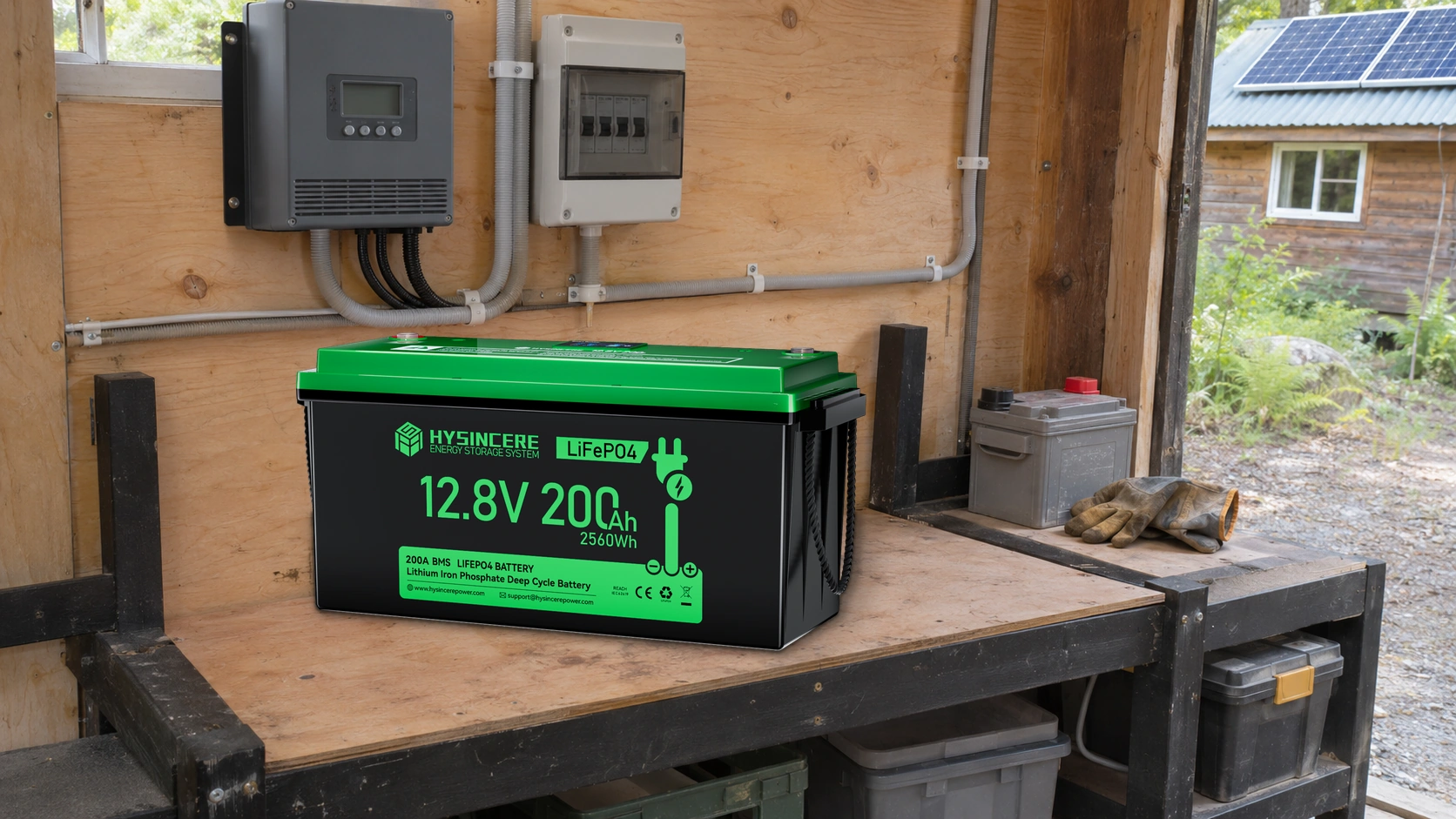
This upgrade approach is for a small off-grid system using a 12V lead-acid battery bank. It considers the Hysincere LF12200N-SL 12.8V 200Ah Smart LCD LiFePO4 Battery while retaining compatible parts of the solar system.
Confirm the DC system voltage before selecting the battery. A single 12.8V battery is not a direct replacement for a 24V or 48V bank. The controller, inverter and battery arrangement need to be reviewed together if the system voltage changes.
View the LF12200N-SL 12.8V 200Ah Smart LCD LiFePO4 Battery specification →
Balance Daily Use With Solar Recharging
List the loads and their operating hours, then compare the daily requirement with the expected charging opportunity. Include evening or overnight use, when solar input may be unavailable.
The reference battery provides 2,560Wh of nominal energy. That does not establish how many cloudy days the system can support. Available solar input, conversion losses, battery operating limits and the required reserve all affect the configuration. Increasing battery capacity alone does not increase the energy collected by the panels.
Check the Controller’s Charging Settings
Review the solar controller’s supported battery types, charge-voltage settings and current limit against the selected battery specification. Check whether its existing lead-acid settings include equalization or other stages that should not carry over unchanged.
Confirm the inverter’s DC input range and low-voltage settings as well. Normal system operation should be coordinated with the battery’s limits, rather than relying on a battery protection shutdown as the everyday stopping point.
Allow for High Loads and Service Access
A small daily energy total can still include a demanding startup or short high-power load. Assess the inverter’s input demand and the equipment used at the same time, not only the battery’s Ah rating.
- Check the battery and inverter current requirements.
- Review DC cable protection, isolation and connections.
- Provide a stable mounting location with access to terminals and the display.
- Evaluate a complete charging and load cycle with the agreed equipment.
Send the Existing System Details
Share the old battery-bank configuration, solar controller and inverter models, panel information and a daily load list. Explain whether another charging source is available during poor solar conditions.
Hysincere can use these inputs to discuss the 12.8V 200Ah option and identify which parts of the existing system can remain.
Discuss Your Battery Upgrade
Share the existing battery, equipment and charger details so we can review the replacement configuration.