
Equipment development · Lighting
Low-Temperature Outdoor Lighting
A 4S2P 18650 pack for outdoor lighting, with protection, a fuel gauge, communication and temperature sensing.
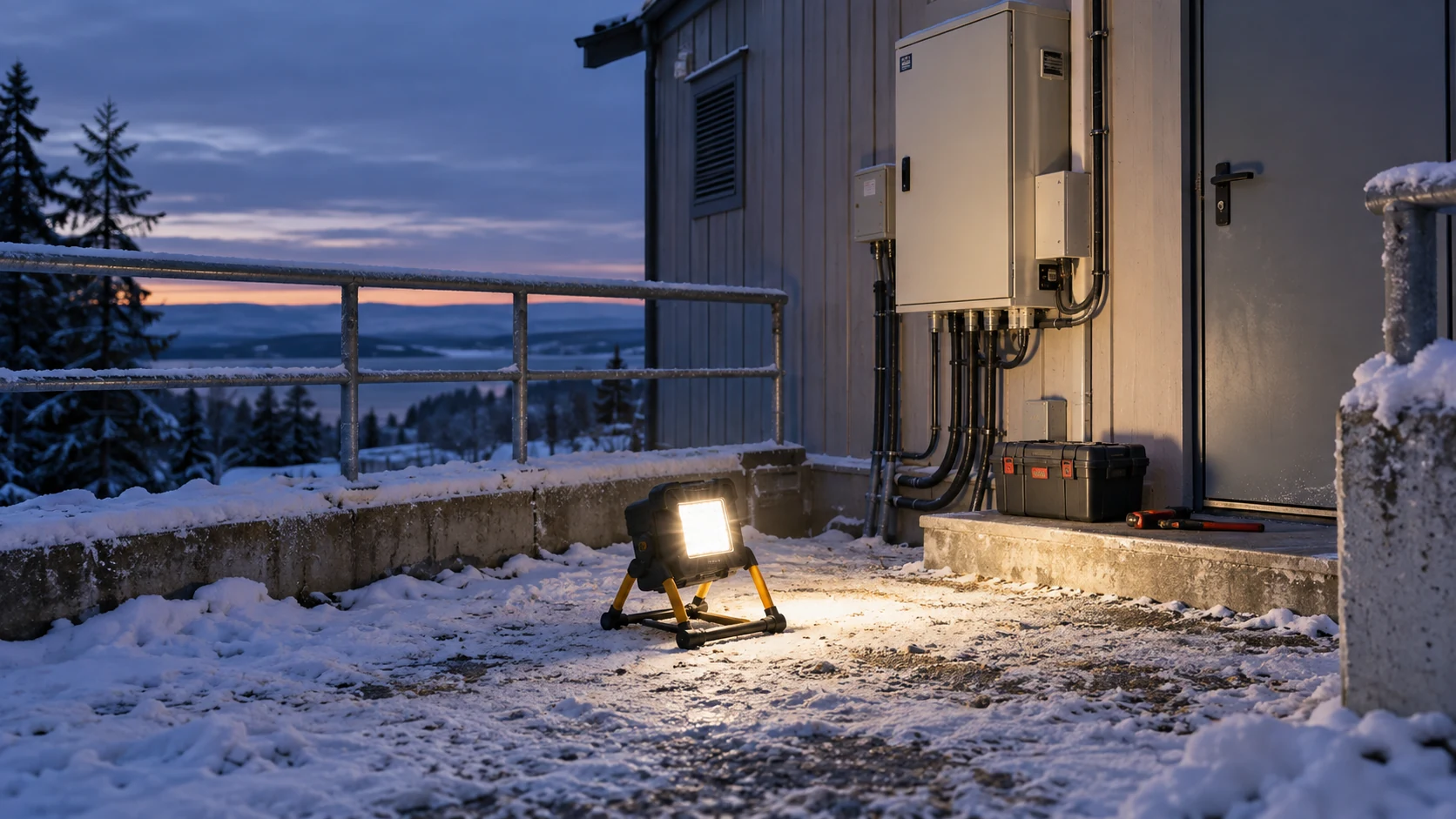
Outdoor Lighting With Low-Temperature Requirements
Hysincere developed this battery approach for outdoor lighting where temperature, continuous load and the intended operating time all affect the choice of cells and protection. The installation space also sets limits on the pack arrangement and wiring.
The project used 18650 cells in a 4S2P configuration, with protection, a fuel gauge and communication. MOS devices and NTC temperature sensing were included, with heat-shrink wrapping around the pack.
Cell Temperature Range and Pack Operating Limits
The selected low-temperature 18650 cell was intended for discharge environments from −40°C to 60°C. That cell-level range does not, by itself, establish the operating range of the assembled battery or the conditions in which it can be charged.
The pack needs to be evaluated with its actual load, protection settings, temperature sensing and cutoff conditions. Charging limits and recovery conditions must be defined separately. A cell’s ability to discharge in the cold should not be interpreted as permission to charge the pack at the same temperature.
Keeping the Light and Battery Information in Step
The protection, fuel gauge and communication functions were considered together with the lighting equipment. Temperature and battery-state information need to fit the way the light is controlled and the way its remaining energy is displayed.
For integration, identify which information the host reads, where temperature is measured and how the equipment responds when a protection condition is reached. The pack’s physical fit, connections and wrapping also need to suit the installation arrangement.
A Useful Low-Temperature Sample Evaluation
A meaningful record needs more than an ambient-temperature number. Agree the sample configuration and test conditions before comparing capacity or lighting time:
- Battery and cell configuration, sample version and lighting load.
- Ambient temperature, sample conditioning and temperature-measurement position.
- Discharge cutoff conditions and the capacity or operating time recorded.
- Permitted charging conditions, protection response and recovery.
- Fuel-gauge readings, host display and temperature records.
This keeps any conclusion tied to the evaluated sample and conditions. A runtime measured with one light or cutoff setting should not be presented as the runtime of a different installation.
Information for a Similar Lighting Battery
Send the light’s electrical load, expected operating schedule, temperature conditions, available battery space and charging arrangement. Describe whether the host needs a battery-state display or communication interface.
Hysincere can then discuss the cell configuration, protection and sample checks around the actual lighting task. Pack limits and expected runtime should be confirmed for that configuration.
Discuss a Battery for Your Equipment
Share the application, load, battery space, charging and communication requirements.