
Lead-acid to LiFePO4 · Cold-weather RVs
Cold-Weather RV Battery Upgrade
Review a 12.8V 100Ah self-heating LiFePO4 option for an RV, with cold-start charging and battery-location checks.
Choose Around Winter Charging Conditions
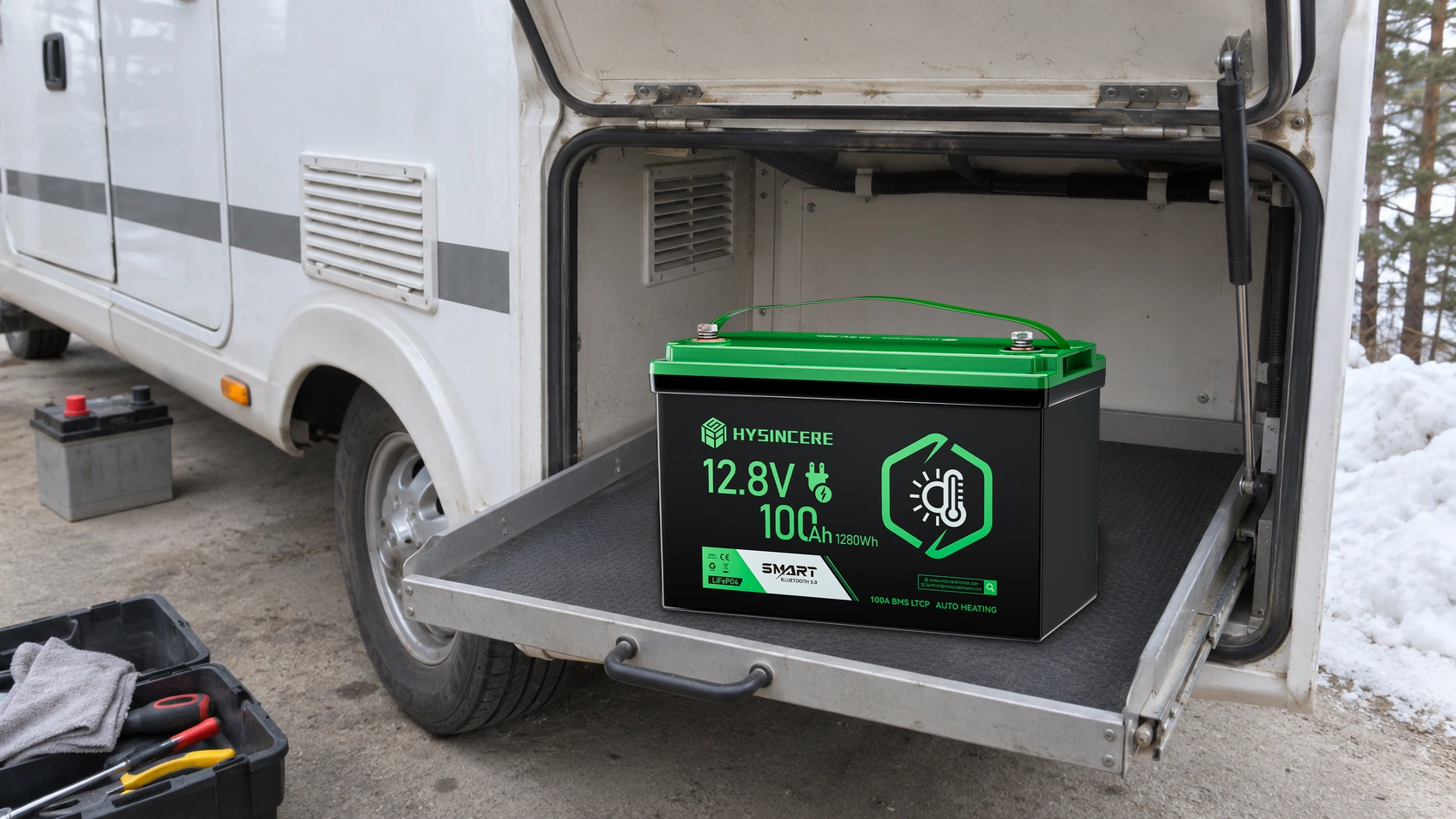
This upgrade approach considers the Hysincere LF12100M-BJ 12.8V 100Ah Self-Heating LiFePO4 Battery for an RV that currently uses a lead-acid house battery. The main question is how the battery and charging sources will behave after a cold overnight stop.
Record the temperature expected at the battery, not only the forecast outside the vehicle. An exposed tray and an enclosed compartment can create different conditions. Those conditions should guide the review of heating, charging and installation.
View the LF12100M-BJ 12.8V 100Ah Self-Heating LiFePO4 Battery specification →
Heating and Charging Need to Work Together
Self-heating does not mean the cells can accept charge at any temperature. Confirm the selected battery’s heating start and stop conditions, the required charging supply and the sequence that allows cell charging to begin.
Check that the available shore, solar or DC-DC charger can support the intended sequence. If solar input is weak during a cold morning, the charging behaviour may differ from operation on shore power. Review each source with the actual battery configuration.
Include Winter Loads in the Energy Plan
Lighting, ventilation, pumps and heating-system auxiliaries can change the RV’s winter load profile. Record overnight use, the length of the stop and the next reliable charging opportunity.
The reference battery has 1,280Wh of nominal energy. Available energy and charging time depend on temperature, loads and the heating operation. Do not use a warm-weather runtime estimate unchanged for winter travel; evaluate the conditions that matter to the planned trip.
Check the Compartment and the Cold-Charge Sequence
Measure the mounting space and confirm terminal clearance, cable access and the battery’s permitted installation conditions. Retain access for service after any changes to the compartment.
- Review the battery’s charging and discharging temperature limits separately.
- Confirm heating requirements with each charging source.
- Check the system response when charging is restricted.
- Evaluate recovery and normal operation after warming.
Use the selected model’s specification for the final settings and sample checks.
Describe the Winter Use You Expect
Send the minimum expected battery-compartment temperature, old battery details, charger models, tray dimensions and overnight load list. Explain whether the RV is stored outside and how it is charged before departure.
Hysincere can then discuss the self-heating option around the actual winter use, instead of selecting a battery from a low-temperature label alone.
Discuss Your Battery Upgrade
Share the existing battery, equipment and charger details so we can review the replacement configuration.