
Lead-acid to LiFePO4 · Trolling motors
24V Trolling Motor Battery Upgrade
Review a 25.6V 100Ah LiFePO4 replacement for a 24V trolling-motor bank, including motor demand and charging.
Keep the Motor’s Voltage Requirement in View
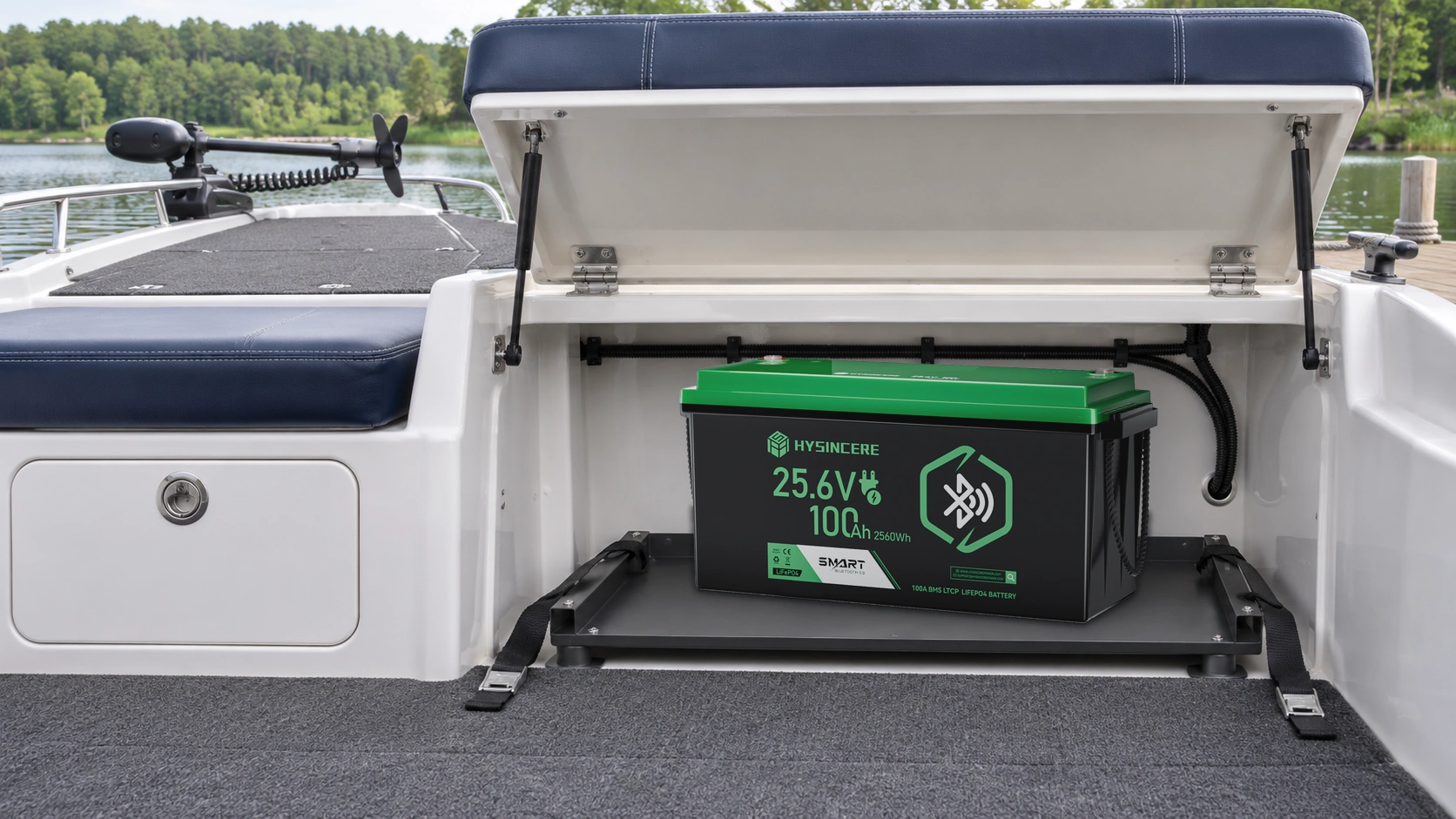
A 24V trolling-motor installation may use two 12V lead-acid batteries in series. This upgrade approach considers the Hysincere LF24100N-B, a 25.6V 100Ah Bluetooth LiFePO4 Battery, as a replacement for that bank after the motor’s permitted input range is checked.
Changing the battery arrangement changes more than the number of cases. The charger, connection layout, protection and battery mounting must suit the new configuration. A 12V or 36V motor needs a different review.
View the LF24100N-B 25.6V 100Ah Bluetooth LiFePO4 Battery specification →
Size for the Way the Motor Is Used
Record the motor model, maximum current and normal operating pattern. Holding position in wind or current can create a different demand from moving slowly across sheltered water. Time at each operating setting matters when estimating energy use.
The reference battery stores 2,560Wh nominally: 25.6V × 100Ah. That figure is an energy reference, not a guaranteed time on the water. Check sustained and short-duration current against the battery specification, then evaluate runtime with the intended motor and operating conditions.
Check the Charger as a Complete Arrangement
A charger previously connected to separate lead-acid batteries should not be assumed to work unchanged with one 25.6V pack. Its voltage, charging profile and output arrangement need to match the replacement battery.
List any onboard charger, shore connection and other charging source. Confirm how each connects to the battery and how charging resumes after a protection event. Complete these checks before retaining the old charging equipment.
Fit the Battery for Movement on the Water
Check the compartment opening, tray footprint and clearance above the terminals. The installation needs a secure hold-down, suitable cable routing and access for isolation and service.
- Keep the trolling-motor supply distinct from the engine-starting requirement.
- Confirm the motor’s voltage range and current demand.
- Review the charger, circuit protection and connectors together.
- Check normal operation and battery-state readings with the actual motor.
Details That Make an Upgrade Review Useful
Send the motor nameplate, old battery arrangement, charger label and compartment measurements. Add the usual fishing duration and whether the motor mainly holds position or provides continuous propulsion.
These details help Hysincere discuss whether the 25.6V 100Ah configuration fits the task and what must change around the battery.
Discuss Your Battery Upgrade
Share the existing battery, equipment and charger details so we can review the replacement configuration.