A custom battery pack sample needs to show whether the agreed configuration works in the intended equipment. Check fit, operating loads, charging and communication, then record which results support further development, a pilot build or production.
Before ordering, agree who will evaluate the sample, under which conditions, and what decision the results will support. Approval for another development test does not automatically authorize production.
This checklist is a starting point for that agreement. Acceptance limits, evaluation methods and sample quantities need to be set for the project by the OEM and battery supplier.
Define what the sample needs to prove
Start with the decision you need to make. One sample may be intended to confirm installation space; another may represent the electrical and mechanical configuration proposed for production. Record that purpose and identify any temporary parts, settings or construction differences.
Write the requirements in terms of equipment behavior. Examples include completing an agreed duty cycle, fitting the available battery bay, charging with the selected charger and providing the information the controller needs. Assign each requirement a reference, a reviewer and an agreed acceptance criterion.
If a requirement is still undecided, record it as an open item. Both teams then know which conclusions the evaluation can support.
Separate factory evidence from equipment approval
Ask the supplier which checks have been completed and which records will accompany the sample. Identify the sample configuration and test conditions covered by each report.
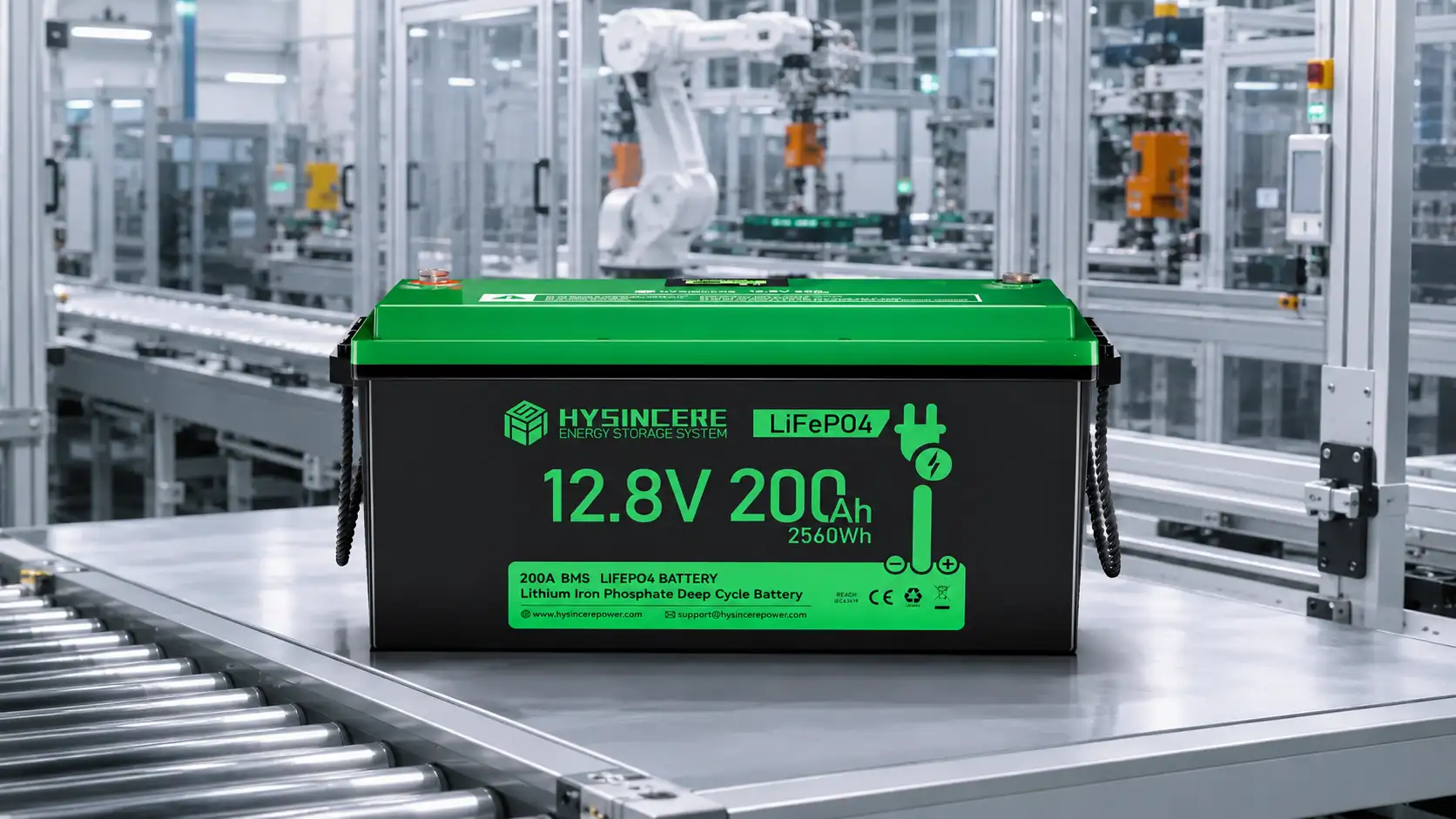
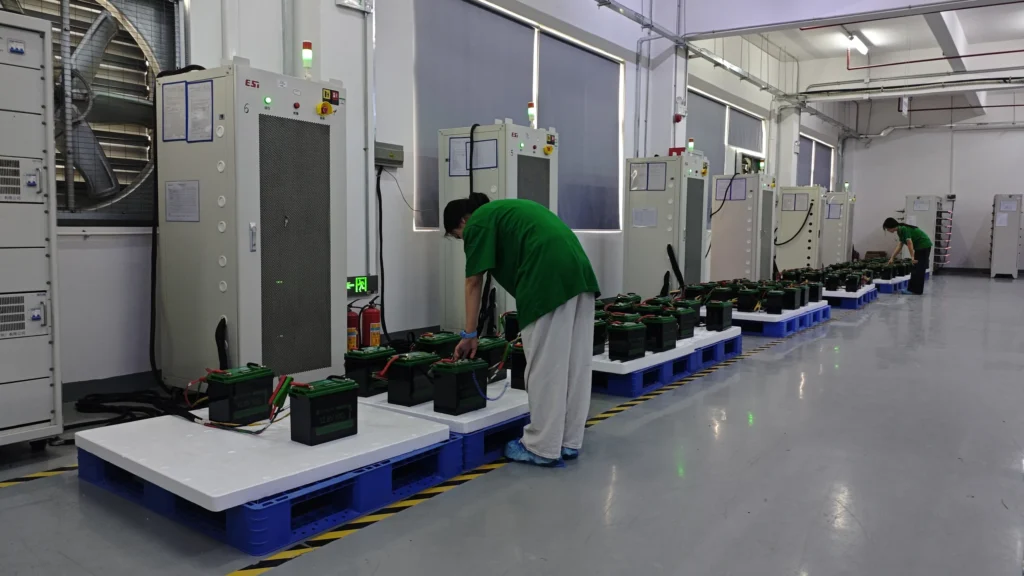
Hysincere’s battery manufacturing and testing overview describes incoming inspection, assembly checks, BMS configuration checks and model-specific production testing. Such records provide a starting point for the OEM’s review.
Equipment approval adds the installation, loads, charger, controller and operating conditions of the actual application. Keep those findings in a separate acceptance report. Before a pilot build or production release, agree how the approved design will be identified and which production inspections will apply. The OEM and ODM battery pack guide provides context for allocating these responsibilities.
Record results against clear pass criteria
Give each checklist item a result, an evidence reference and a reviewer. Use “not evaluated” where evidence is missing. Mark an item “not applicable” only when its exclusion has been agreed.
| Check | Record in the sample report | Source of pass criteria |
|---|---|---|
| Sample identity | Pack model, sample identifier, drawing revision, BMS hardware/firmware revision and declared deviations | Agreed sample specification and configuration list |
| Mechanical fit | Equipment revision, mounting arrangement, connector access, cable routing and service clearance | Approved drawings and installation requirements |
| Operating voltage and current | Equipment load profile, observed operating range, peak magnitude, duration and recurrence, and event logs | Pack limits and agreed equipment load requirements |
| Runtime or usable energy | Duty cycle, payload, settings, start and end conditions, environment and recorded result | Agreed operating scenario and runtime requirement |
| Charging | Actual charger model, configuration, connection arrangement and charging observations | Confirmed pack–charger requirements and approved evaluation plan |
| Communication and system response | Protocol revision, required data, displayed values and observed controller responses | Agreed interface specification and behavior requirements |
| Installation environment | Conditions covered during evaluation and conditions still awaiting assessment | Project operating-environment requirements |
| Documents and outstanding work | Report references, drawing status, deviations, unresolved items and responsible owners | Agreed document list and issue-closure requirements |
| Approval scope | Decision, authorized next stage, configuration, reviewers and date | Project release process and written acceptance agreement |
Keep detailed measurements in the supporting reports and link to them from the checklist. That makes the approval record readable without losing the evidence behind a decision.
Evaluate the conditions the equipment will encounter
Agree a representative operating scenario before collecting results. Record the equipment configuration, payload, accessory loads, operating settings and relevant environmental conditions. For mobile equipment, identify the route and charging opportunities. For stationary equipment, identify the load sequence and expected operating period.
Illustrative acceptance record: suppose the agreed requirement is at least four hours on a defined route with a stated payload, start condition and end condition. A recorded result of four hours ten minutes meets that runtime criterion only if those conditions were followed. Attach the route log, temperature, sample ID and software versions. It does not establish cold-weather performance, cycle life or approval of the remaining checks.
Capture the context of an interruption as carefully as the result: what the equipment was doing, what the battery reported and which configuration was in use. Review anomalies through the agreed engineering process before changing the pack or equipment settings.
Use the intended charger and controller where available. If evaluation equipment differs from the planned installation, describe that difference and assign the remaining validation work. A result should be reported within the conditions actually evaluated.
If the equipment uses an RS485 robot battery, the RS485 integration checklist explains the protocol, data validity and recovery checks in more detail.
Make the approval decision explicit
At the review meeting, assess each requirement and outstanding issue. A practical approval record can use these statuses:
- Approved for the stated next stage: the agreed requirements for that stage have been met and the referenced evidence is complete.
- Conditionally approved: list the limited work authorized, each unresolved item, its owner and the condition required to close it. State whether a pilot build is permitted.
- Revision and reevaluation required: identify the affected requirements and the evidence needed after the change.
- Evaluation incomplete: specify the missing information or work before a decision can be made.
Use statuses that fit the OEM’s release process. A purchasing decision, an engineering acceptance and an authorization to manufacture may require different reviewers. Record the appropriate names, dates and scope instead of relying on an email that simply says “sample approved.”
Bind the decision to the production configuration
Record the approved configuration using controlled document references: drawings, bill of materials, BMS hardware and firmware, settings, connectors, labels and relevant accessories. Link the approval to the sample identifiers and reports used during evaluation.
Agree how proposed changes will be communicated and reviewed. When a component, setting or interface changes, identify which earlier conclusions may be affected and agree the necessary reevaluation before release. Keep the revised configuration and its approval together.
The pilot build should have its own agreed purpose, quantity, inspection requirements and release decision. Sample acceptance establishes evidence about the evaluated configuration; production quality also needs defined controls and records for subsequent builds.
Include these review stages in the project scope when discussing samples and production. The custom battery pack cost and quote guide can help buyers identify which development, sample and documentation items need to be included in a quotation.
Plan Your Battery Sample
Send the equipment requirements, installation drawing, charger and controller details, sample purpose and quantity. Include the checks your team needs before the next project stage.