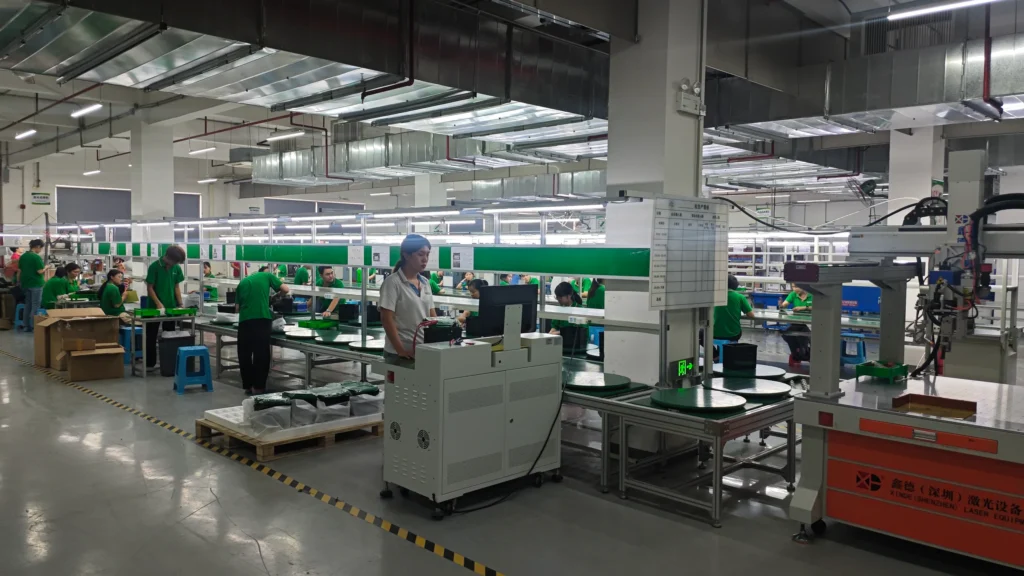
At Hysincere, we build LiFePO4 battery packs from purchased cells. The work starts with incoming inspection and cell matching, then moves through assembly, testing and packing. Here is a closer look at what happens on the production line, with a factory photo and an example from our BMS development work.
Before the cells reach the assembly line
Incoming cells are checked against the requirements for the product. The specified checks can include appearance, dimensions, voltage, internal resistance and capacity. The results are used to sort and match the cells. Material that fails inspection is identified and kept apart while the team decides how to handle it.
Before a batch starts, production staff check the parts against the drawings and parts list, set up the tooling and select the test program. The first unit is inspected before production continues.
This preparation matters when the line changes models. Two batteries may have the same voltage and capacity but use different terminals, wiring or BMS settings. Clearing leftover materials, changing labels and checking the program are part of that changeover.
Building the pack and checking the BMS
The matched cells are joined and fitted with insulation, wiring and an enclosure. The joining method depends on the materials and design; laser welding and ultrasonic metal welding are among the processes Hysincere uses where appropriate.
While the pack is being assembled, we check polarity, connections, insulation and how the cells and wires are secured. Fasteners and seals are checked where the design uses them. If something needs rework, the team records the repair and repeats the affected checks.
The battery management system, or BMS, has its own checks: the board version, sensing wires, temperature sensors, program and settings must match the product. Communication and display functions are checked on models that include them.
Our AGV battery development project gives a practical example of why this matters. The automated guided vehicle needed to read battery information and coordinate its operation with battery protection. Our engineers worked on the messages passed between the BMS and the vehicle controller, including the data to be sent and what should happen when protection activates or clears.
At the sample stage, the work included checking communication, protection and changes in operating state with the equipment. Mounting points, wiring and space for maintenance were considered alongside those functions. It is a useful reminder when discussing a battery specification: communication requirements need to say which information the equipment needs and how it will respond.
What the factory tests can tell you
The photo below shows battery packs connected to test equipment at our factory. Assembled packs go through the charging, discharging, aging and functional checks specified for their model. An abnormal result calls for investigation, followed by the required corrective work and retesting.
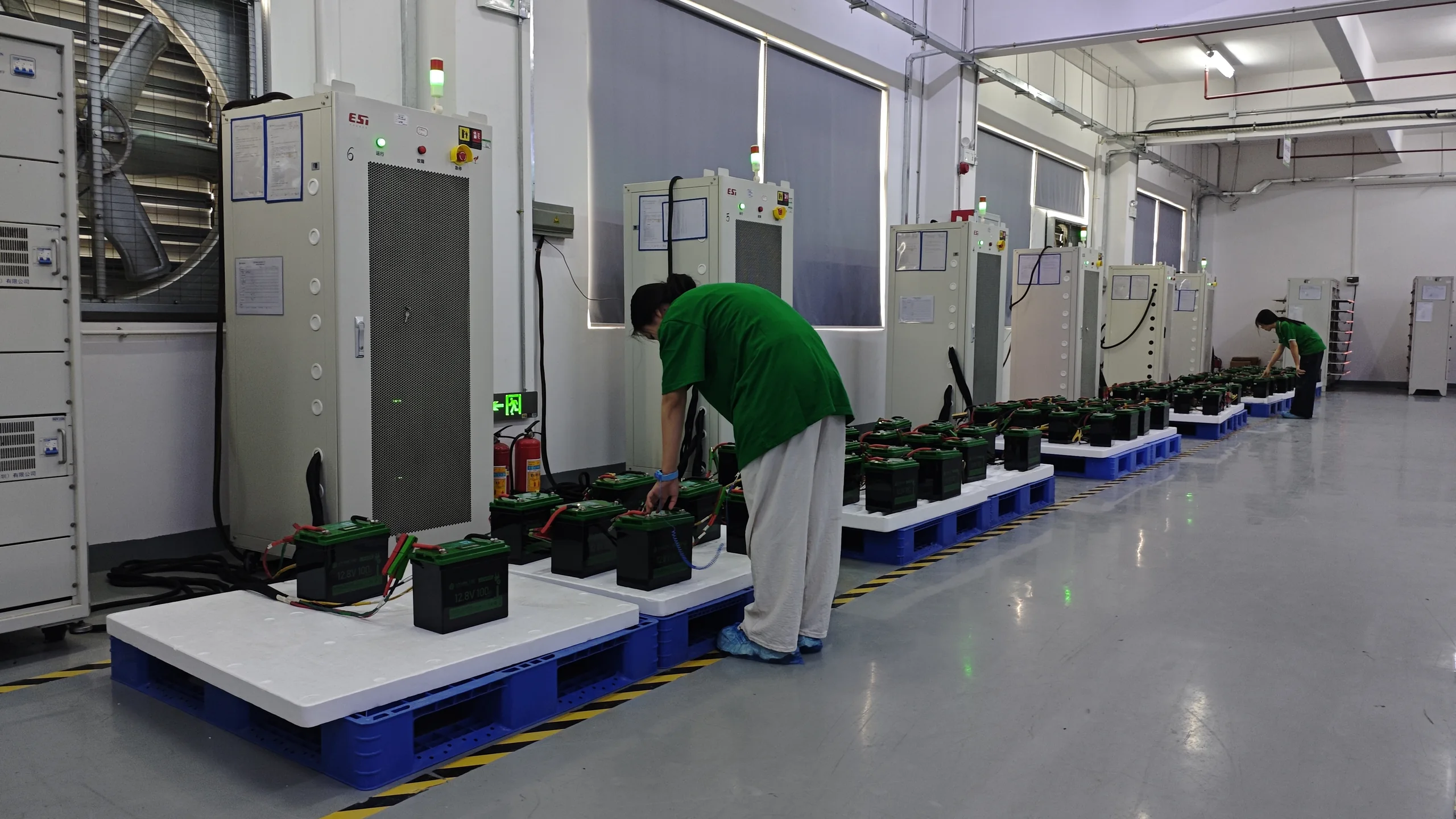
Each test record identifies the model and version, the equipment or channel, the program, test conditions and results. When reviewing a report, start with the model and conditions. A capacity figure is easier to interpret when you can see how it was measured. Also check whether the report covers production inspection, a batch sample or design validation.
Production aging helps identify abnormalities under a set test program. It does not, by itself, establish cycle life. For a cycle-life result, look for the temperature, charging and discharging rates, depth of discharge and the remaining-capacity threshold used to end the test. Our LiFePO4 battery lifespan guide explains how to read those conditions.
The records stay with the batch
Before packing, we check the model, quantity, labels, accessories and documents agreed for the order. The shipment is linked to its production batch, key materials, product version and inspection results.
Those records become useful if a customer needs help later. The model, batch or serial information lets us find the relevant configuration and inspections. A label photo, the equipment and charger details, and a description of when the problem occurs help us take the next step.
If you are evaluating a Lead-Acid Replacement Battery, tell us the model you are considering and which inspection documents you need. We can discuss those requirements while arranging the sample or order.
Discuss a Battery Model or Sample
Tell us what the battery will power and the quantity you need. We can help you review a model, arrange samples and discuss inspection documents.