
When designing portable electronics or industrial equipment, understanding the true lifespan of the power source is critical. A common question among engineers and product managers is: How long is the typical lifespan of polymer lithium batteries?
1. Polymer Battery Life and Charging Cycles
The lifespan of a lithium battery is determined by the number of complete charge cycles it undergoes, rather than the simple number of times it is plugged into a charger. A charge cycle is defined as a full 100% discharge and recharge. For example, if a battery consumes 50% of its capacity on the first day and is fully recharged, and then does the exact same thing the next day, those two 50% charges count as only one complete charge cycle, not two.
After each complete charging cycle, the battery’s capacity will slightly decrease. However, with high-quality cells, this degradation is minimal. After hundreds of cycles, premium polymer batteries can still maintain at least 80% of their original capacity. This is why many high-end lithium-ion powered devices remain fully functional after two to three years of daily use.
2. When Does a Polymer Battery Reach its End of Life?
Eventually, all lithium batteries will degrade to a point where they need to be replaced. For standard polymer lithium batteries, the typical service life is rated at 300 to 500 full charge cycles. Assuming the total energy provided by a complete cycle is ‘Q’, the battery will deliver roughly 300Q to 500Q of total power over its operational life.
This means that if you consume half of the battery’s capacity per use, you can charge it 600 to 1000 times before it reaches the end of its life. If you consume one-third of the capacity per use, you can charge it 900 to 1500 times. Regardless of how randomly the battery is charged, the total cumulative energy throughput remains relatively constant.
3. The Impact of Depth of Discharge (DoD)
A common misconception is that batteries need to be fully depleted before recharging. In reality, shallow discharging and shallow charging are actually more beneficial for the lifespan of lithium batteries. Deep discharging (draining the battery to 0%) causes significant stress on the chemical structure of the cell.
Deep discharges are generally only required when calibrating a device’s battery management system (BMS) software. Therefore, products powered by lithium batteries do not need to be completely drained during normal use. Users can top off the charge at any time with convenience, without worrying about negatively impacting the battery’s overall lifespan.
Maximize Product Lifespan with Premium Battery Cells
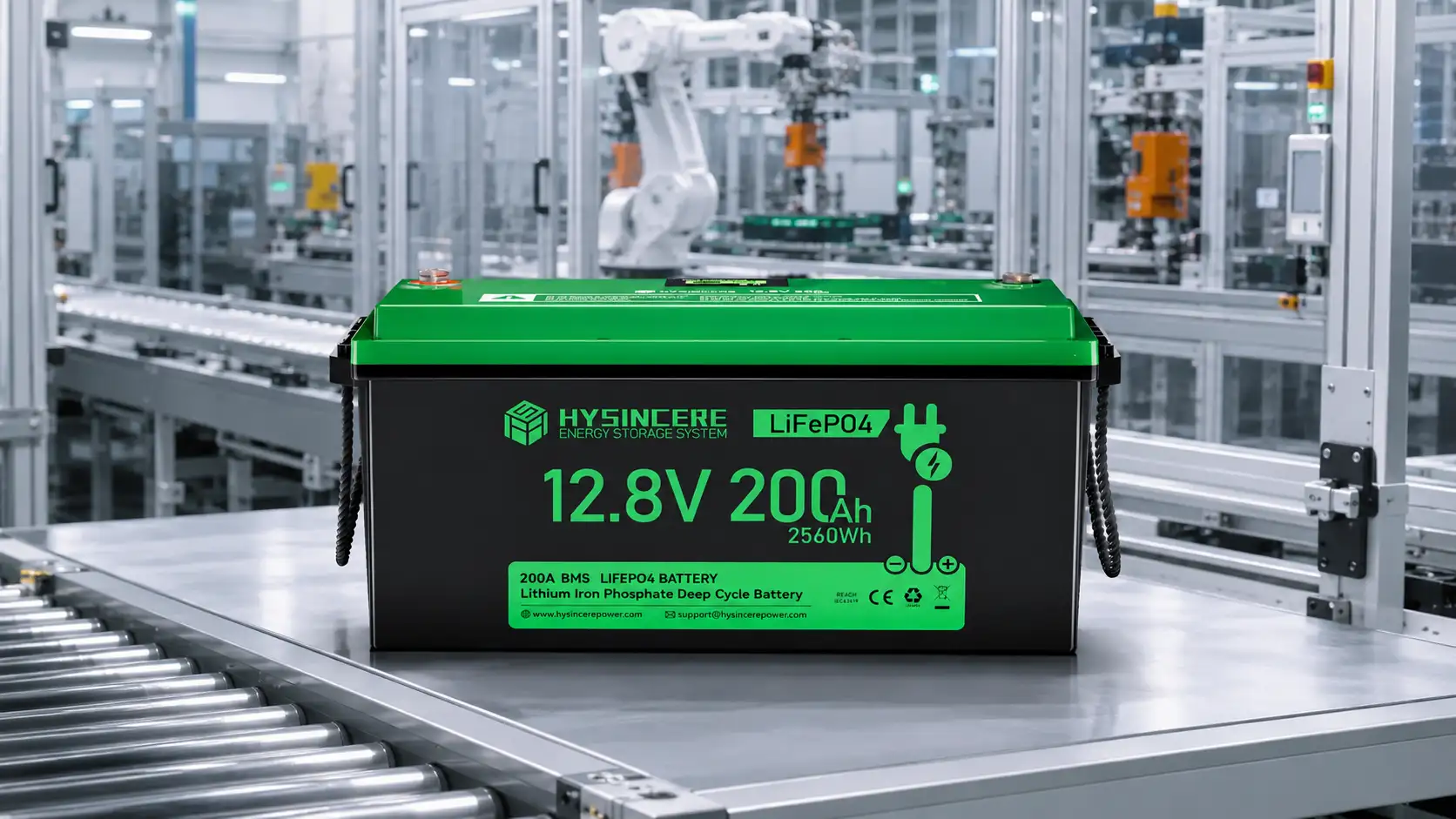
The operational lifespan of any battery-powered device is fundamentally limited by the quality of the cells inside. At Hysincere, we manufacture premium lithium-ion and LiFePO4 battery cells that are engineered for high cycle life, minimal capacity degradation, and exceptional thermal stability. Whether you are building consumer electronics, medical devices, or industrial energy storage systems, Hysincere’s reliable battery solutions ensure your products power through years of demanding use.
Discuss Your Cell Selection and Custom Battery Requirements
Share voltage, capacity, continuous and peak current, dimensions, cycle life, temperature, certification, and annual-volume requirements so Hysincere can evaluate suitable cells and battery-pack options.
Understanding the Typical Lifespan of Polymer Lithium Batteries FAQ
What does this guide explain about understanding the typical lifespan of polymer lithium batteries?
When designing portable electronics or industrial equipment, understanding the true lifespan of the power source is critical. A common question among engineers and product managers is: How long is the typical lifespan of polymer lithium batteries? 1.
1. Polymer Battery Life and Charging Cycles?
The lifespan of a lithium battery is determined by the number of complete charge cycles it undergoes, rather than the simple number of times it is plugged into a charger. A charge cycle is defined as a full 100% discharge and recharge.
2. When Does a Polymer Battery Reach its End of Life?
Eventually, all lithium batteries will degrade to a point where they need to be replaced. For standard polymer lithium batteries, the typical service life is rated at 300 to 500 full charge cycles. Assuming the total energy provided by a complete cycle is 'Q', the battery will deliver roughly 300Q to 500Q of total power over its operational life.
This article is intended for technical reference and preliminary project evaluation. Battery compatibility, charging limits, current capability, temperature range, BMS behavior, certifications, and installation requirements vary by model and application. Final selection and system configuration must follow the selected product datasheet, equipment-manufacturer requirements, and system-validation results.