Sodium-ion chemistry alone does not make a battery suitable for a hybrid vehicle. A replacement must work with the vehicle’s voltage window, charge and discharge pulses, controls, cooling and safety systems. Matching nominal voltage or physical size is insufficient.
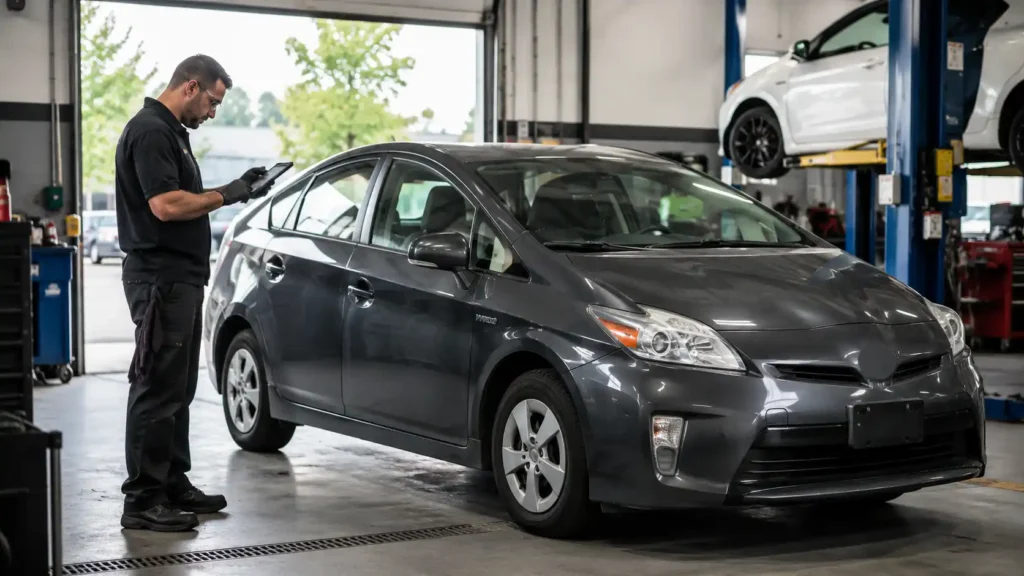
This is a technical evaluation guide, not a vehicle conversion procedure or confirmation that Hysincere supplies an approved hybrid-vehicle replacement. High-voltage battery work belongs to trained, qualified personnel following the vehicle service documentation.
Define the hybrid duty before comparing chemistries
A hybrid traction battery may repeatedly deliver drive-assist power and accept regenerative braking energy. Both charging and discharging capability matter, including performance near the limits of temperature and state of charge.
Do not assume all sodium-ion cells have the same low-temperature, cycle-life or safety characteristics. The exact cell specification and pack design are decisive. A claim that a cell can be transported or stored at a very low voltage must not be generalized into permission to discharge an assembled battery to 0 V.
- Record the required voltage range, not just nominal voltage.
- Obtain charging and discharging pulse profiles with durations and repetition rates.
- Define operating temperatures, cooling conditions and the permitted state-of-charge window.
Check controls, charging and fault behavior as a system
Changing chemistry can change the voltage response and the relationship between voltage and state of charge. The vehicle controller must interpret the replacement battery correctly during acceleration, regenerative braking and fault conditions.
Electrical fit is only one part of compatibility. Evaluate sensors, communication, diagnostic behavior, insulation, contactors, mechanical retention and service procedures. A stationary-storage report cannot establish suitability for a vehicle traction system.
Compare evidence rather than broad chemistry rankings
Use the same vehicle requirements to evaluate every candidate. General claims such as “nonflammable,” “drop-in” or “better in the cold” require specific evidence and must not replace system validation.
| Requirement | What to define | Evidence needed | Do not infer from |
|---|---|---|---|
| Voltage compatibility | Operating and fault limits | Cell, module and system validation | Nominal voltage alone |
| Regenerative charging | Charge pulse, duration and conditions | Charge acceptance and protection behavior | A discharge-current rating |
| Thermal operation | Ambient range and cooling | Measured temperatures and fault response | Chemistry name |
| Controls and diagnostics | Signals, communication and monitoring | Vehicle-level integration testing | Matching connectors |
| Durability and safety | Duty cycle and applicable requirements | Relevant model-specific tests and approvals | Reports for another application |
Keep a research comparison separate from a replacement decision
An interesting chemistry is a reason to investigate, not permission to modify a vehicle. A replacement decision needs a documented, vehicle-specific approval route and a complete validation plan.
For other custom battery-pack projects, Hysincere can review the stated application requirements and confirm the feasible project scope. Existing stationary or auxiliary battery products do not prove compatibility with a hybrid traction system.
Discuss Your Cell Selection and Custom Battery Requirements
Share voltage, capacity, continuous and peak current, dimensions, cycle life, temperature, certification, and annual-volume requirements so Hysincere can evaluate suitable cells and battery-pack options.
Frequently Asked Questions
Can sodium-ion cells replace a hybrid battery directly?
Chemistry alone cannot establish compatibility. The replacement must be validated for the particular vehicle’s electrical, thermal, control and safety requirements.
Can every sodium-ion battery be discharged to 0 V?
No such general rule should be used. Storage, transport and discharge limits are specific to the cell and complete pack. Follow their documented limits.
Does a storage-battery test report qualify a vehicle battery?
No. Duty cycles, controls, installation and applicable requirements differ. Evidence must cover the intended vehicle system and exact configuration.
Not a vehicle conversion instruction or a claim of approved replacement compatibility. High-voltage work requires appropriately qualified personnel and the vehicle manufacturer’s service procedures.