In the world of heavy-duty equipment, industrial machinery, and commercial agriculture, battery failure is not an option. Equipment downtime means lost revenue. When sourcing replacement power, procurement managers and mechanics frequently encounter specific industry-standard part numbers, most notably the 153-5710 and 153-5656 battery models.
But what do these part numbers actually mean? Accurate model identification is essential for ensuring compatibility, proper cold-cranking performance, and operational safety. Here is a comprehensive engineering guide to understanding these heavy-duty battery specifications.
Decoding Heavy-Duty Battery Specifications
Battery model numbers like 153-5710 and 153-5656 are not just random digits; they represent a highly specific Bill of Materials (BOM) designed for extreme environments. When cross-referencing these batteries, engineers look at four primary metrics:
- Voltage & Capacity: Ensures the battery can run the heavy-duty starter motors and onboard electronics.
- CCA (Cold Cranking Amps): The amount of current the battery can deliver at 0°F (-18°C) for 30 seconds. Crucial for construction equipment operating in winter conditions.
- BCI Group Size: Determines the physical dimensions (length, width, height) and terminal placement to ensure it physically fits into the machine’s battery tray.
- Vibration Resistance: Heavy machinery batteries require reinforced casings and stabilized plates to survive constant mechanical shock.
153-5710 Battery: The Versatile Workhorse
The 153-5710 battery (sometimes searched as 1535710) is a premium high-output commercial battery. In standard industrial applications, this part number often corresponds to a Group 31 size battery.
- Typical Specifications: 12-Volt system, delivering approximately 1000 CCA.
- Applications: Widely used in mid-sized construction equipment, agricultural tractors, commercial heavy-duty trucks, and backup generators.
- Why it matters: The 153-5710 designation guarantees that the battery has the robust internal lead connections and high-density active materials required to crank massive diesel engines reliably.
153-5656 Battery: Maximum Cranking Power
While the 153-5710 is incredibly versatile, some earth-moving machinery requires even more raw power. The 153-5656 battery model typically indicates a significantly larger, distinct battery type—often aligning with the massive Group 8D classification.
- Typical Specifications: 12-Volt system, delivering upwards of 1400 to 1500 CCA.
- Applications: Massive mining excavators, large-scale wheel loaders, articulated trucks, and heavy marine engine starting.
- Why it matters: The 153-5656 is designed to handle the most brutal power demands on the planet. Putting a smaller battery into a machine designed for a 153-5656 will result in starter motor burnout and immediate battery failure.
Comparison: 153-5710 vs. 153-5656 Characteristics
| Specification Category | 153-5710 (Typical Profile) | 153-5656 (Typical Profile) |
|---|---|---|
| System Voltage | 12V | 12V |
| Common BCI Group Size | Group 31 | Group 8D |
| Cold Cranking Amps (CCA) | ~1000 CCA | ~1400+ CCA |
| Equipment Match | Mid-to-Large Tractors, Commercial Trucks | Heavy Excavators, Mining Equipment |
| Weight Class | Heavy (~65 lbs) | Extremely Heavy (~130 lbs) |
Upgrade Your Heavy-Duty Equipment with Hysincere
Accurate model identification facilitates seamless sourcing and minimizes expensive equipment downtime. Whether your fleet relies on the proven footprint of the 153-5710 or the massive cranking power of the 153-5656, choosing high-quality replacements is vital.
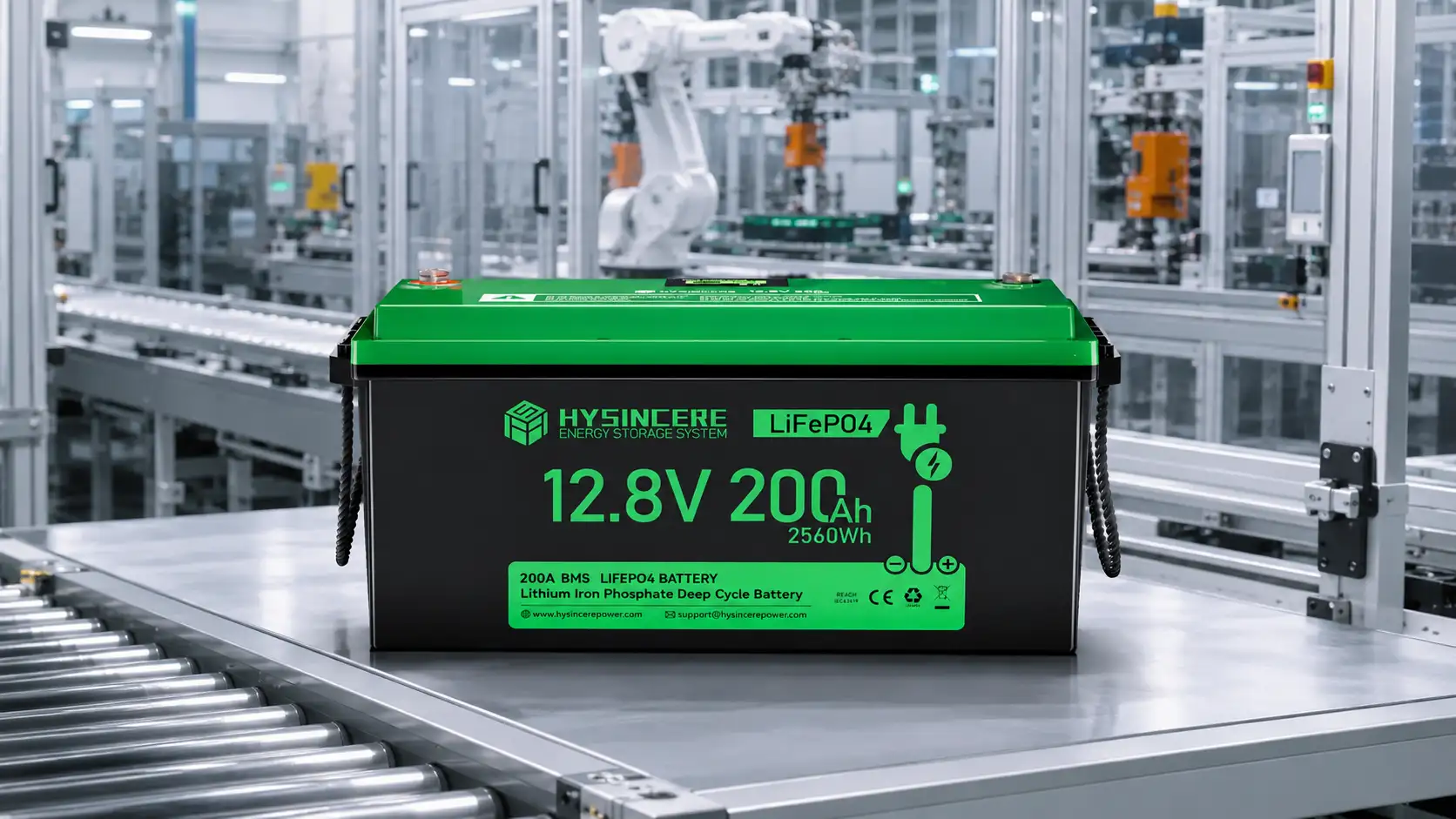
At Hysincere, we understand the punishing environments of industrial machinery. We provide premium industrial battery solutions and next-generation LiFePO4 commercial upgrades designed to withstand extreme vibration, deliver unyielding starting power, and dramatically outlast standard OEM batteries. Partner with us to keep your heavy-duty fleet operating at peak performance.
Discuss Your Battery Project Requirements
Share the application, voltage, capacity, load, charging method, dimensions, temperature, certification, and annual-volume requirements for an initial technical review by Hysincere.
This article is intended for technical reference and preliminary project evaluation. Battery compatibility, charging limits, current capability, temperature range, BMS behavior, certifications, and installation requirements vary by model and application. Final selection and system configuration must follow the selected product datasheet, equipment-manufacturer requirements, and system-validation results.