A 12V 100Ah LiFePO4 battery can power the everyday comforts of a trip: a compatible fridge, LED lights, a water pump, a small fan and charging outlets. It is a useful option for a modest RV living area, a prepared camping setup or a boat’s domestic electrical system. Whether one battery is enough depends on how much you use and when you can recharge.
Think of arriving at camp on Friday evening. The food needs to stay cold, you want light over the table, and your phone needs charging. Those are manageable needs to plan around. Adding electric cooking or air conditioning changes the picture.
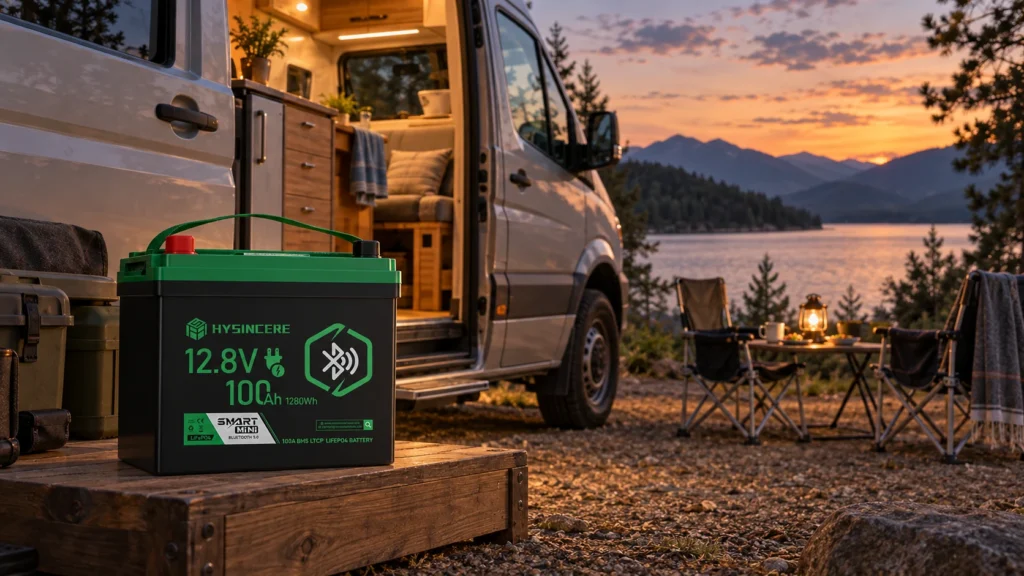
RV weekends: power for the living space
Once you have parked, the battery’s job is straightforward: keep the fridge running, supply the lights and run the freshwater pump when you open a tap. On a warm night, the roof fan may stay on after everything else is switched off.
These loads do not all run in the same way. The pump works briefly; a reading light might be on for an hour; the fridge cycles through the night. Pay particular attention to the fridge’s measured daily consumption, especially in hot weather. Counting appliances alone will not tell you how much energy you need.
Allow for breakfast and packing up, too. If your next stop has a power hookup, you need less time between charges than if you are staying by the lake for another two nights. Our RV battery guide covers the wider vehicle setup.
Camping: a fridge, a light and charged devices
After a walk, it is good to come back to a cold drink and a light over the dinner table. A phone, camera or laptop may also need charging. Start with the equipment you actually take, including your companions’ devices, rather than adding appliances simply because you have brought a battery.
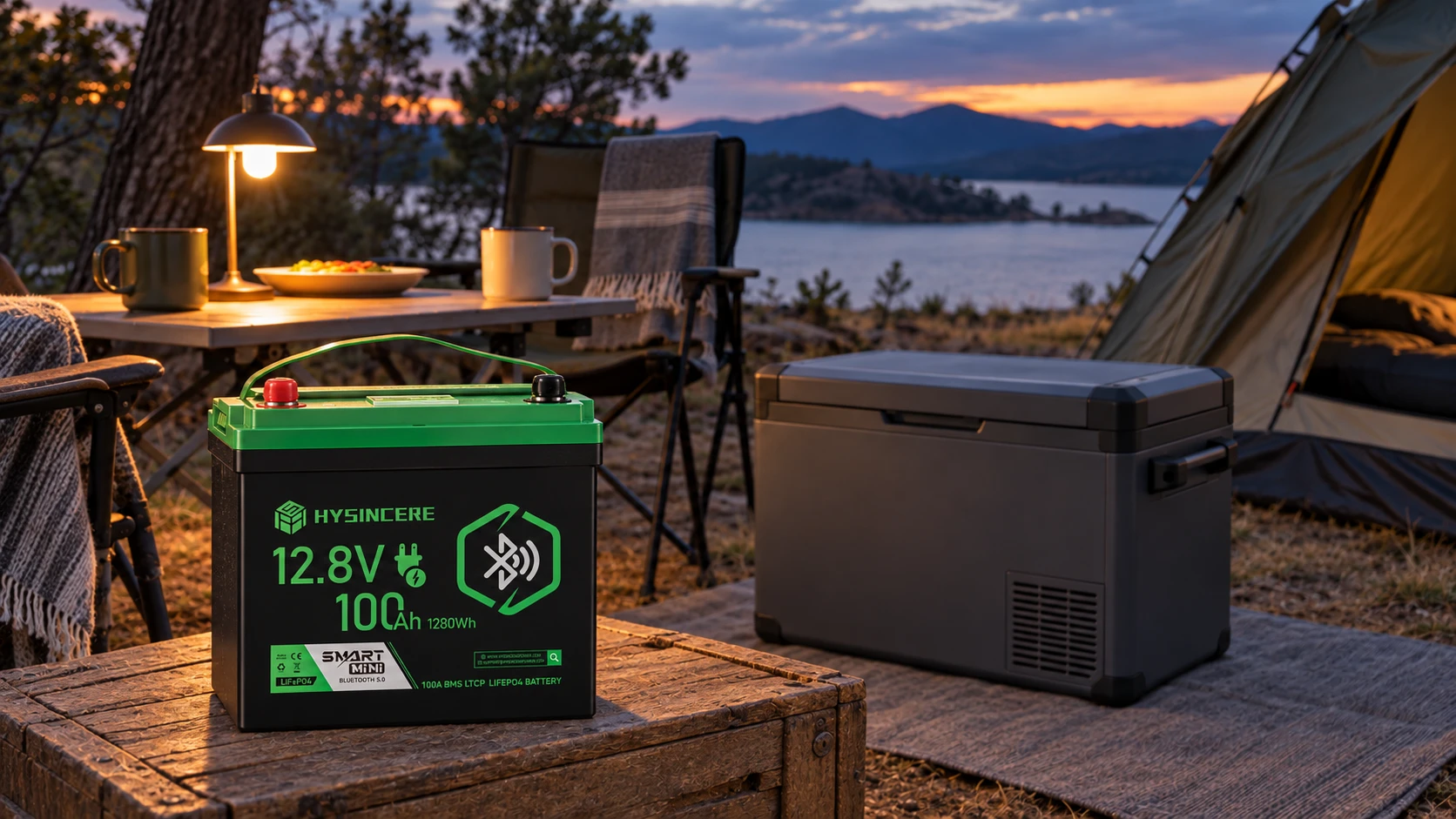
A standalone battery is not an all-in-one portable power station. It needs a suitable enclosure or secure mounting, protected wiring, a compatible charger and the right outlets. USB devices need an appropriate adapter; mains-powered equipment needs an inverter. Have that setup ready before leaving home.
A compressor fridge’s nameplate power is not the same as its average draw over an evening. Check its energy-use specification or measure it in conditions close to your trip. A hot tent, frequent opening and warm food can all increase demand.
On a boat: lights and refrigeration after docking
After docking, the cabin may need very little: a fridge, a reading light, a fan and a freshwater pump. A suitable 100Ah battery can be considered for these domestic loads, provided the complete system and time between charges have been checked.
This is separate from starting an engine or powering a propulsion motor. A deep-cycle battery should not be used for either job unless its manufacturer approves the exact application. Essential vessel circuits also need their own reserve and protection plan.
Know where the next charge will come from. Shore power at a marina is different from relying on solar while at anchor, where rigging shadows and weather affect output. Have a qualified marine installer review the mounting, charging and protection arrangements. See our marine battery application guide for more on onboard requirements.
Will one 100Ah battery cover your trip?
The useful question is how much energy you will use before the next reliable charge. “A weekend” might mean one quiet overnight stop or two full days of refrigeration, laptop work and ventilation.
- List the loads. Include overnight equipment and devices that remain on standby.
- Estimate energy use. For a steady load, watts × hours gives watt-hours (Wh). Use measured daily energy for appliances that cycle.
- Leave a reserve. Account for conversion losses, changing weather and a delayed recharge.
For scale, a 12.8V 100Ah battery holds 1,280Wh of nominal energy. A 10W lamp used for five hours needs about 50Wh at the lamp. That simple calculation helps build a load list; it does not mean all 1,280Wh will reach your appliances. Usable energy depends on the battery’s limits, conditions and the rest of the system.
Before a longer trip, try your normal evening and morning routine close to home with a fully charged, correctly installed system. Check a suitable battery monitor before bed and again in the morning. Stop short of a protective shutdown. For current limits, inverter sizing and a fuller energy calculation, use our 12V 100Ah battery selection guide.
Replacing lead-acid: check the rest of the setup
If the old battery is heavy to handle or no longer covers an overnight stay, LiFePO4 may be worth considering. Compare the actual products and their permitted usable capacity; matching two “100Ah” labels is not enough.
Check the battery space, terminal positions, wiring and every charging source, including solar and vehicle charging. Existing lead-acid charging settings may not suit the new battery. For winter trips, confirm the permitted charging temperature and whether the chosen model has low-temperature protection or heating.
A 12V 100Ah option from Hysincere
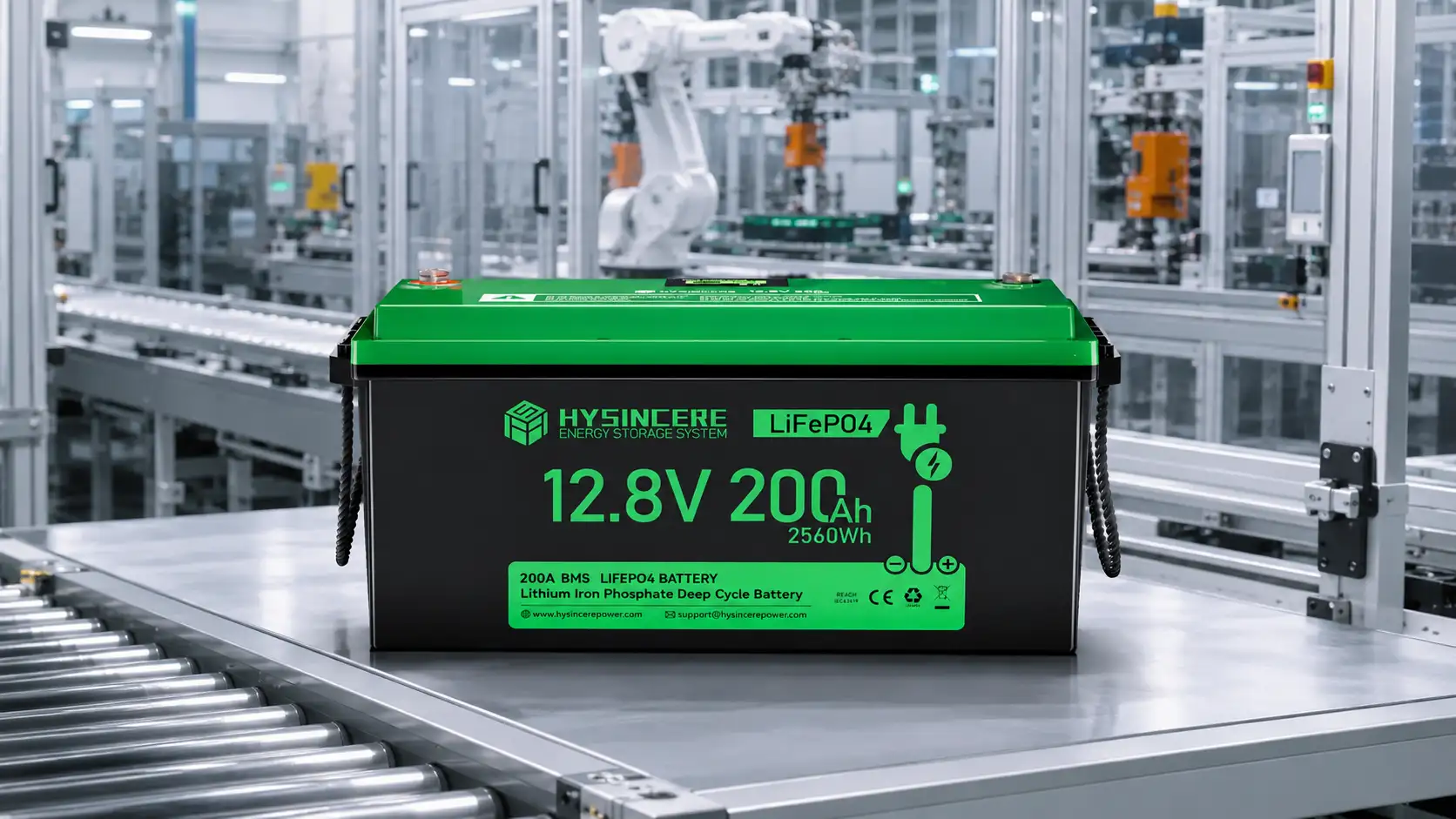
The Hysincere LF12100N-B is a Bluetooth LiFePO4 battery rated at 12.8V, 100Ah and 1,280Wh, with a listed weight of 8.95kg. It is designed for lead-acid replacement and deep-cycle equipment. Suitability for a particular RV, camping or boat setup still depends on the loads, charging equipment and installation.
If you are comparing options, start with your equipment list, the time between charges and photos of your current battery and charger. Equipment builders and distributors can also include the intended application and expected quantity. That gives us something practical to work from.
Planning a 12V battery setup?
Tell us what you need to power and when you can recharge. Photos of your battery space and charger will help us check the options.
Common questions
Can a 12V 100Ah LiFePO4 battery run a camping fridge?
It can be an option for a compatible fridge. Check measured daily energy use, startup current and the other connected loads before estimating runtime. Hot weather and frequent opening can increase consumption.
Will one 100Ah battery last a whole weekend?
There is no fixed weekend runtime. Add the energy needed until the next reliable charge and allow for losses and a reserve. Two nights with a fridge and fan can be very different from one short overnight stop.
Is this the same as a portable power station?
No. A standalone battery needs suitable mounting or an enclosure, protected wiring, charging equipment and outlets. AC appliances also need a compatible inverter.
Can I use a deep-cycle LiFePO4 battery to start a boat engine?
Only if the exact battery is approved for starting that engine. The house-power uses in this article do not establish suitability for starting or propulsion.
Can I keep my existing lead-acid charger?
Only if its settings and operating behaviour are compatible with the chosen LiFePO4 battery. Check every charging source against the battery instructions, including temperature limits.
Images are AI-generated application illustrations based on the LF12100N-B product image, not customer installations or wiring instructions. Confirm the final system against the battery and equipment manuals.