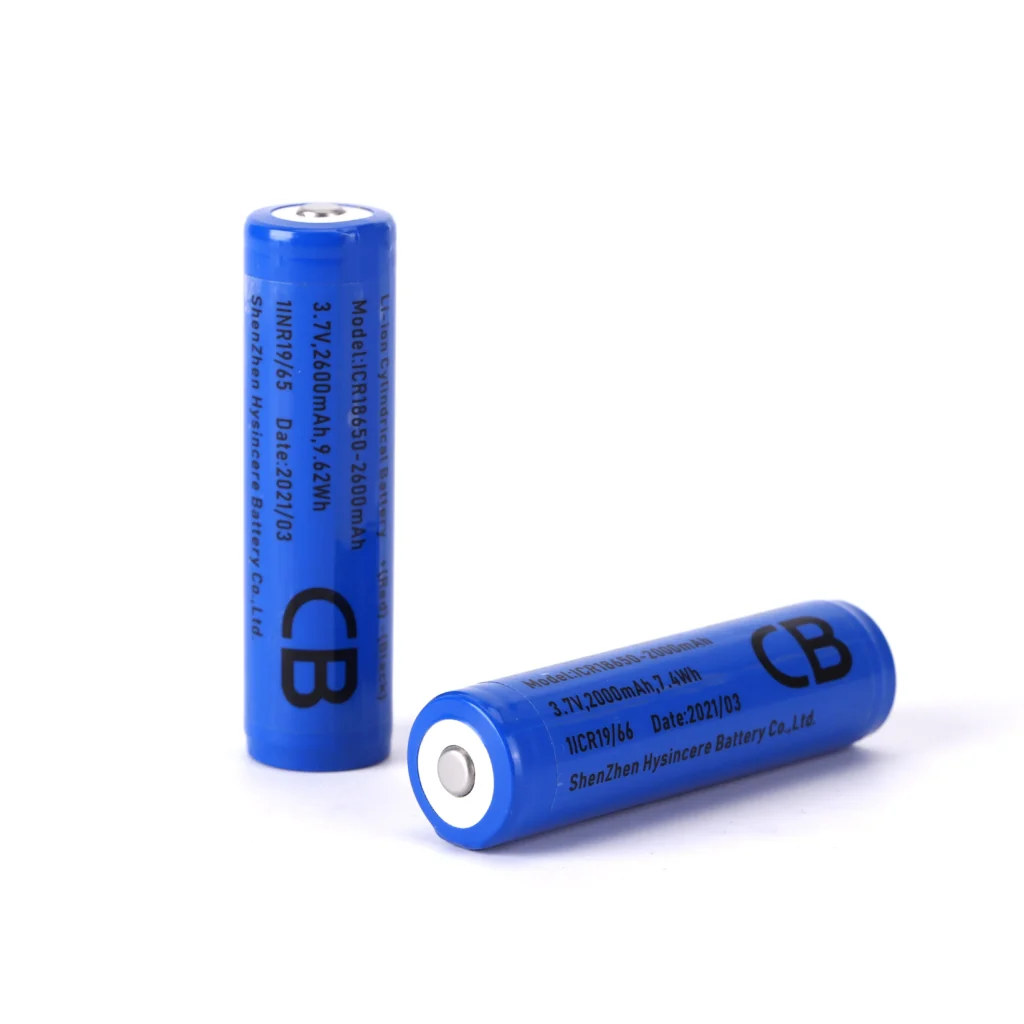
In today’s demanding energy storage landscape, the 18650 rechargeable battery 3.7V has become a widely trusted solution for manufacturers, engineering firms, and OEMs seeking high-density, compact, and reliable power sources. Known for its cylindrical format and robust lithium-ion chemistry, this cell is frequently used in scalable power systems for robotics, IoT devices, backup modules, and smart mobility platforms.
This article examines the technical characteristics, use cases, and sourcing considerations for the 3.7 volt 18650 lithium battery, providing critical insights for enterprise buyers and system integrators.
What Is an 18650 Rechargeable Battery 3.7V?
The 18650 battery 3.7V Li-ion is a standardized lithium-ion rechargeable cell featuring a nominal voltage of 3.7 volts and a typical capacity ranging between 2000mAh to 3500mAh.
Key benefits include:
- High energy density in a highly compact cylindrical format.
- Long cycle life (typically 500–1000+ cycles, depending on depth of discharge and load).
- Low self-discharge rate, making it ideal for standby and backup applications.
- Wide operational temperature range (generally -20°C to +60°C).
- Seamless compatibility with advanced Battery Management Systems (BMS).
Industrial & Commercial Applications
The 3.7 volt 18650 lithium battery is far more than a consumer-grade component. In B2B environments, it serves as the foundational building block for a wide range of engineering applications, including:
- Medical Electronics: Portable diagnostic tools, CPAP machines, and infusion pumps.
- Energy Storage Systems (ESS): Modular battery banks and Uninterruptible Power Supplies (UPS).
- Industrial IoT Sensors: Remote wireless monitoring systems and smart grid infrastructure.
- Electric Mobility: E-scooters, commercial drones, and lightweight automated guided vehicles (AGVs).
- Security Systems: Wireless surveillance devices, smart locks, and commercial alarm systems.
When configured in series or parallel, these individual cells can be customized into large, robust battery packs capable of delivering 12V, 24V, 48V, or even higher system voltages.
Chemistry and Safety: Li-ion Inside the 18650 Format
Not all 18650 cells are created equal. The internal chemistry dictates the cell’s performance, safety, and ideal application. Here is how the primary variations compare:
| Chemistry Type | Characteristics | Primary Use Cases |
|---|---|---|
| ICR (LiCoO₂) | High energy density, moderate safety under extreme stress. | Consumer electronics, laptops, low-drain devices. |
| IMR (LiMn₂O₄) | High discharge rate, excellent thermal stability. | Power tools, robotics, high-drain mechanical devices. |
| INR (LiNiMnCo) | Perfectly balanced performance, safe under heavy load. | EV modules, medical devices, high-end industrial packs. |
Technical Specifications at a Glance
| Parameter | Typical Range / Specification |
|---|---|
| Nominal Voltage | 3.7V |
| Capacity | 2000mAh – 3500mAh |
| Charging Voltage | 4.2V (maximum) |
| Standard Discharge | 2A – 10A (highly model dependent) |
| Operating Temp Range | -20°C to +60°C |
| Cell Dimensions | Ø18.3mm x 65mm |
| Recharge Cycles | 500 – 1000 (at 80% capacity retention) |
*Note: These cells can be configured with flat-top or button-top terminals, depending on specific assembly or device requirements.
Key Considerations for Commercial Procurement
For engineering firms and companies sourcing 18650 rechargeable battery 3.7V units at scale, it is critical to prioritize strict quality control:
- Verify Supplier Consistency: Always partner with Tier 1 or certified OEM manufacturers to ensure batch-to-batch reliability.
- Protected vs. Unprotected Cells: Determine if your application requires built-in protection (PCB) against overcurrent, overcharge, and short circuits, or if you will rely on an external pack-level BMS.
- Evaluate Cell Matching: When building multi-cell battery packs, precise internal resistance and voltage matching are mandatory for consistent performance and longevity.
- Avoid Gray-Market Cells: Relabeled or counterfeit cells often feature misleading specifications and pose severe thermal safety risks.
Source Premium 18650 Cells with Hysincere
The 18650 rechargeable battery 3.7V continues to be a critical building block in modern industrial energy systems. Its compact form factor, high reliability, and modular scalability make it the prime choice for engineering-focused applications that demand uncompromising performance and safety.
As you consider these cells for product development or system integration, working with a vetted manufacturing partner is essential. At Hysincere, we provide strictly tested, perfectly matched 18650 lithium-ion cells and custom battery pack solutions. We ensure that every battery delivered meets global safety certifications, delivering the durable and efficient energy solutions your industrial projects require.
Discuss Your Cell Selection and Custom Battery Requirements
Share voltage, capacity, continuous and peak current, dimensions, cycle life, temperature, certification, and annual-volume requirements so Hysincere can evaluate suitable cells and battery-pack options.
Understanding 18650 Rechargeable Battery 3.7V: Key Features & Selection Tips FAQ
What does this guide explain about understanding 18650 rechargeable battery 3.7v: key features & selection tips?
In today’s demanding energy storage landscape, the 18650 rechargeable battery 3. 7V has become a widely trusted solution for manufacturers, engineering firms, and OEMs seeking high-density, compact, and reliable power sources. Known for its cylindrical format and robust lithium-ion chemistry, this cell is frequently used in scalable power systems for robotics, IoT devices, backup modules, and smart mobility platforms.
What Is an 18650 Rechargeable Battery 3.7V?
The 18650 battery 3. 7V Li-ion is a standardized lithium-ion rechargeable cell featuring a nominal voltage of 3. 7 volts and a typical capacity ranging between 2000mAh to 3500mAh. Key benefits include: High energy density in a highly compact cylindrical format. Long cycle life (typically 500–1000+ cycles, depending on depth of discharge and load). Low self-discharge rate, making it ideal for standby and backup applications.
Industrial & Commercial Applications?
The 3. 7 volt 18650 lithium battery is far more than a consumer-grade component. In B2B environments, it serves as the foundational building block for a wide range of engineering applications, including: Medical Electronics: Portable diagnostic tools, CPAP machines, and infusion pumps. Energy Storage Systems (ESS): Modular battery banks and Uninterruptible Power Supplies (UPS).
This article is intended for technical reference and preliminary project evaluation. Battery compatibility, charging limits, current capability, temperature range, BMS behavior, certifications, and installation requirements vary by model and application. Final selection and system configuration must follow the selected product datasheet, equipment-manufacturer requirements, and system-validation results.