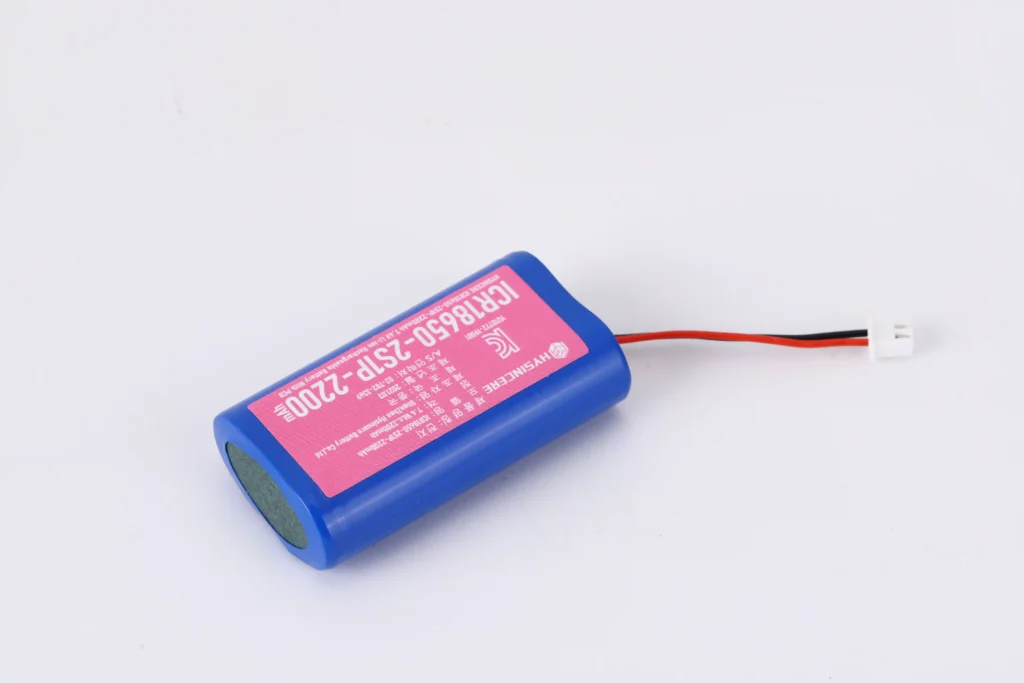
In industrial, commercial, and OEM battery applications, understanding the precise differences between a protected vs. unprotected 18650 battery is essential for making informed, safe procurement decisions. The choice between a protected cell and a raw, unprotected cell fundamentally impacts circuit integration, physical form factor, and the ultimate safety of your energy system.
This engineering guide provides a clear technical comparison of these two cell types, explaining where each is best utilized to help enterprise buyers select the optimal lithium-ion solution for their specific applications.
What Is a Protected 18650 Battery?
A protected 18650 battery is a standard lithium-ion cell equipped with a miniaturized electronic circuit board (PCB or PCM), typically welded to the negative base or positive terminal. This built-in protection circuit actively monitors key safety parameters, automatically disconnecting the circuit if it detects:
- Overcharge: Prevents the voltage from exceeding safe limits (usually 4.2V), which could cause thermal runaway.
- Over-discharge: Cuts off power when the voltage drops too low (usually around 2.5V), preventing irreversible chemical damage.
- Short-circuit and Over-current: Instantly breaks the circuit if an abnormally high current is drawn.
Dimensional Note: Because of the added protection circuit and the outer wrapper holding it together, protected 18650 batteries are slightly longer and wider. They typically measure around 69mm to 70mm in length compared to the standard 65mm of an unprotected cell. They are primarily used in standalone consumer devices lacking an internal Battery Management System (BMS).
What Is an Unprotected 18650 Battery?
Unprotected 18650 batteries are the raw, standard form of lithium-ion cells. They contain no internal electronic safety circuitry. While this makes them vulnerable to overcharging or short-circuiting if mishandled individually, they are the absolute industry standard for multi-cell pack manufacturing.
In professional B2B applications, unprotected cells are welded together to form large battery packs, which are then governed by a single, highly advanced external BMS. Common use cases include:
- OEM battery packs for heavy-duty power tools.
- E-bikes, electric scooters, and automated guided vehicles (AGVs).
- Industrial energy storage systems requiring centralized monitoring.
- High-drain vape devices and flashlights that utilize proprietary internal control boards.
Technical Comparison Matrix
| Feature | Protected 18650 Battery | Unprotected 18650 Battery |
|---|---|---|
| Circuit Protection | Yes (Overcharge, Discharge, Short-circuit) | No (Relies on external BMS) |
| Physical Length | ~69mm to 70mm | Exactly ~65mm |
| Discharge Rate (Amps) | Lower (Restricted by the PCB limit) | Maximum (Full raw potential of the cell) |
| Primary Use Case | Standalone use, single-cell consumer devices | OEM multi-cell packs with an external BMS |
| Ease of Use | Plug-and-play safety | Requires strict engineering and external monitoring |
Choosing the Right Cell for Your Business
When to Use Protected 18650 Batteries
If your device operates in unpredictable environments without advanced internal protection, a protected 18650 battery ensures maximum user safety. They are ideal for:
- Medical Devices: Where absolute, foolproof safety is a strict regulatory requirement.
- Tactical Flashlights: Where end-users may use variable or uncertified chargers.
- Portable Measurement Instruments: Used individually by field engineers.
When to Use Unprotected 18650 Batteries
Unprotected cells allow for greater control over pack design, form factor, and customization of discharge limits. They are the mandatory choice for:
- Energy Storage Manufacturers: Designing multi-cell packs with a robust, centralized BMS.
- E-Mobility Brands: Integrating smart charge/discharge controls into the vehicle’s motherboard.
- Tool Manufacturers: Using embedded proprietary protection within the device housing.
Secure Your Supply Chain with Hysincere
When comparing protected vs. unprotected 18650 batteries, the procurement decision hinges on your product’s power architecture and the end-user environment. Whether your project requires the plug-and-play safety of premium protected cells or bulk quantities of high-drain unprotected cells for custom pack assembly, partnering with a certified manufacturer is critical.
At Hysincere, we specialize in comprehensive B2B lithium-ion solutions. We support OEM customization, custom BMS integration, and strict quality control testing tailored to your industry’s exact specifications. Contact our engineering team today to source the safest, most reliable 18650 power solutions on the market.
Discuss Your Cell Selection and Custom Battery Requirements
Share voltage, capacity, continuous and peak current, dimensions, cycle life, temperature, certification, and annual-volume requirements so Hysincere can evaluate suitable cells and battery-pack options.
Protected vs. Unprotected 18650 Batteries: A B2B Engineering Guide FAQ
What does this guide explain about protected vs. unprotected 18650 batteries: a b2b engineering guide?
In industrial, commercial, and OEM battery applications, understanding the precise differences between a protected vs. unprotected 18650 battery is essential for making informed, safe procurement decisions. The choice between a protected cell and a raw, unprotected cell fundamentally impacts circuit integration, physical form factor, and the ultimate safety of your energy system.
What Is a Protected 18650 Battery?
A protected 18650 battery is a standard lithium-ion cell equipped with a miniaturized electronic circuit board (PCB or PCM), typically welded to the negative base or positive terminal. This built-in protection circuit actively monitors key safety parameters, automatically disconnecting the circuit if it detects: Overcharge: Prevents the voltage from exceeding safe limits (usually 4. 2V), which could cause thermal runaway.
What Is an Unprotected 18650 Battery?
Unprotected 18650 batteries are the raw, standard form of lithium-ion cells. They contain no internal electronic safety circuitry. While this makes them vulnerable to overcharging or short-circuiting if mishandled individually, they are the absolute industry standard for multi-cell pack manufacturing.
This article is intended for technical reference and preliminary project evaluation. Battery compatibility, charging limits, current capability, temperature range, BMS behavior, certifications, and installation requirements vary by model and application. Final selection and system configuration must follow the selected product datasheet, equipment-manufacturer requirements, and system-validation results.