Reducing battery costs has always been a primary objective in the new energy industry. While advancements in battery systems and extended service life contribute significantly to cost reduction, the two most critical drivers for bringing down prices today are economies of scale and resource recycling.
The Economics of Scale in Battery Manufacturing
Scaling up production is a proven method for reducing per-unit manufacturing costs. A prime example is the global electric vehicle (EV) market. By adopting standardized 18650 cylindrical battery cells (18mm in diameter and 65mm in length), leading EV manufacturers achieved a cost reduction of approximately 40% between 2007 and 2012 simply through massive scale expansion.
As the adoption of new energy vehicles continues to surge and power batteries enter ultra-large-scale production, manufacturing costs are expected to drop even further. This continuous scaling is essential for meeting aggressive national and global energy conservation targets and making green energy accessible to a broader market.
The Challenges and Value of Resource Recycling
Beyond manufacturing, resource utilization and recycling present a massive opportunity for cost reduction. However, the industry still faces challenges, such as incomplete recycling systems and the currently low economic return of recycling power lithium-ion batteries.
Although major recycling enterprises have emerged in the Asian market—such as GEM and Hunan Brunp—the recycling of power lithium batteries still struggles with high processing costs and an immature industrial chain. To overcome these hurdles, the lithium battery industry must learn from the highly successful lead-acid battery recycling model.
Lead-acid batteries benefit from a deeply established, closed-loop recycling network. When a lead-acid battery reaches its end of life, it generally retains a recycling value of about 30%. Building a similarly robust and profitable recycling ecosystem for lithium-ion batteries will be the ultimate key to minimizing long-term raw material costs and achieving true sustainability.
Sustainable and Cost-Effective Solutions with Hysincere
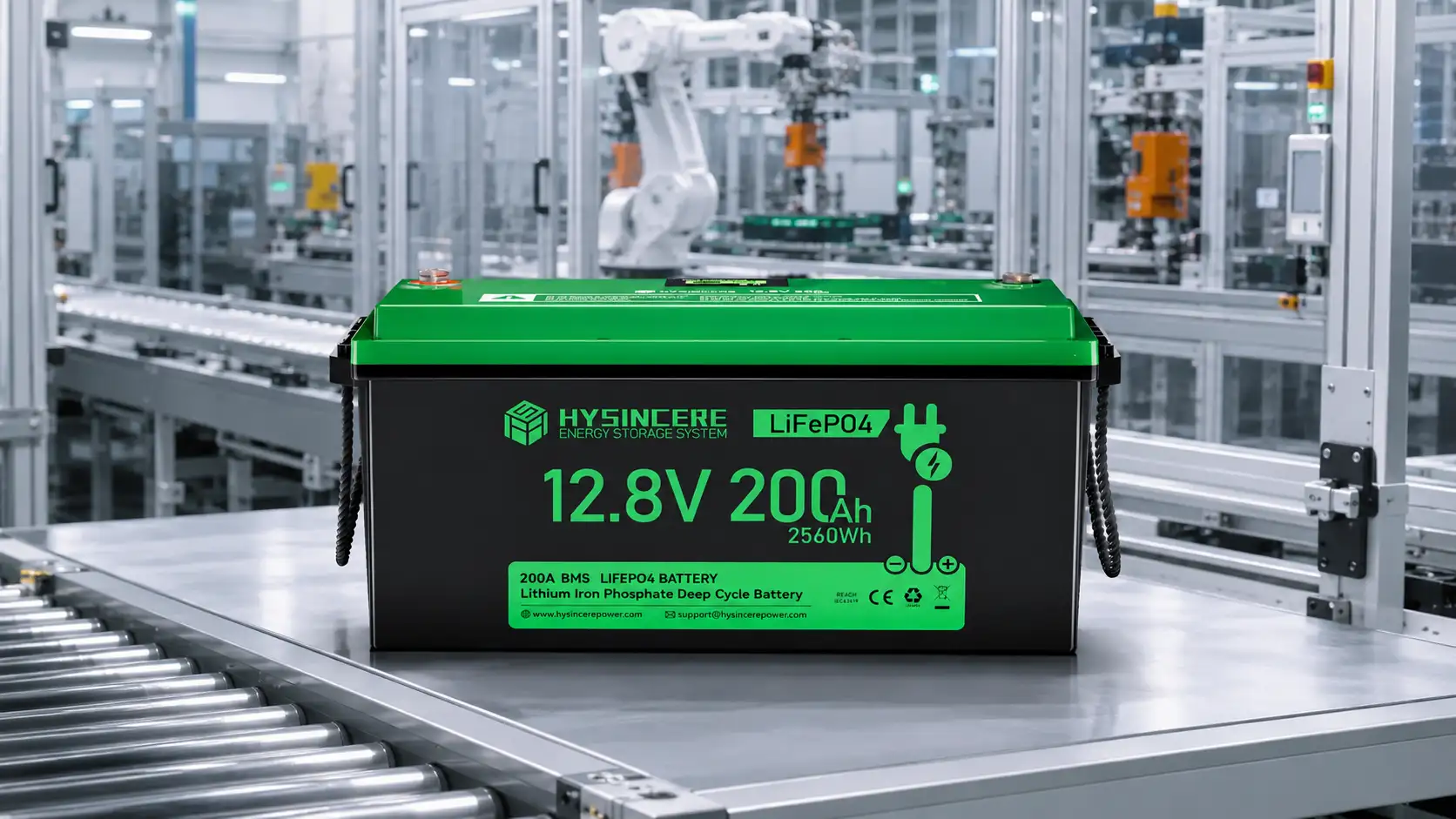
Achieving cost efficiency without compromising quality requires a manufacturer that understands both scale and sustainability. At Hysincere, we leverage state-of-the-art automated production lines to achieve economies of scale, delivering premium lithium-ion and LiFePO4 battery cells at highly competitive prices. Whether you are scaling up electric vehicle production or deploying large energy storage systems, Hysincere is your trusted partner for high-performance, cost-effective, and sustainable battery solutions.
Discuss Your Battery Project Requirements
Share the application, voltage, capacity, load, charging method, dimensions, temperature, certification, and annual-volume requirements for an initial technical review by Hysincere.
Reducing Battery Costs: The Power of Scale and Resource Recycling FAQ
What does this guide explain about reducing battery costs: the power of scale and resource recycling?
Reducing battery costs has always been a primary objective in the new energy industry. While advancements in battery systems and extended service life contribute significantly to cost reduction, the two most critical drivers for bringing down prices today are economies of scale and resource recycling.
The Economics of Scale in Battery Manufacturing?
Scaling up production is a proven method for reducing per-unit manufacturing costs. A prime example is the global electric vehicle (EV) market. By adopting standardized 18650 cylindrical battery cells (18mm in diameter and 65mm in length), leading EV manufacturers achieved a cost reduction of approximately 40% between 2007 and 2012 simply through massive scale expansion.
The Challenges and Value of Resource Recycling?
Beyond manufacturing, resource utilization and recycling present a massive opportunity for cost reduction. However, the industry still faces challenges, such as incomplete recycling systems and the currently low economic return of recycling power lithium-ion batteries.
This article is intended for technical reference and preliminary project evaluation. Battery compatibility, charging limits, current capability, temperature range, BMS behavior, certifications, and installation requirements vary by model and application. Final selection and system configuration must follow the selected product datasheet, equipment-manufacturer requirements, and system-validation results.