Lithium cell names describe different things. “18650” identifies a cylindrical size class; “LiFePO4” identifies a cathode chemistry; “pouch” describes the packaging. These are not competing categories, and none of them alone establishes a cell’s current capability or safety.
For an OEM project, separate packaging, electrolyte and electrode chemistry before comparing datasheets. Then check the complete pack against the equipment’s electrical, mechanical and temperature requirements.
1. Classification by Form Factor and Packaging
Based on their external appearance and the materials used for their outer casing, lithium-ion cells generally fall into three main categories:
- Cylindrical cells, such as 18650: These use a round, usually metal enclosure. The 18650 name refers to an approximate 18 mm by 65 mm size class, not a guaranteed maximum dimension. Check the drawing, terminal arrangement, protection board and space for insulation and connections.
- Prismatic cells: A rectangular metal enclosure can make efficient use of available space. Check mounting, terminals, heat removal and any specified compression requirements for the actual model. The shape does not establish a current or cycle-life rating.
- Pouch cells: Flexible laminate packaging replaces the rigid can. Electrode assemblies may be stacked or wound, depending on the design. Allow for mechanical protection and specified thickness changes. A pouch is not inherently safer and does not guarantee a fixed energy-density advantage over a cylindrical cell.
2. Electrolyte Type and the “Lithium-Polymer” Label
The electrolyte carries ions between the electrodes. Its composition and physical state must be considered separately from the outer package:
- Liquid-electrolyte lithium-ion cells: These can use cylindrical, prismatic or pouch packaging. The liquid is held within the porous electrodes and separator; the package shape does not identify the electrolyte formulation.
- Polymer and gel systems: Polymer materials may form part of the electrolyte system. The commercial label “LiPo” does not prove that a pouch cell contains a fully solid electrolyte. Use the model’s technical documentation rather than inferring electrolyte type from its appearance.
3. Electrode Chemistry: Cathodes and the LTO Anode
Electrode materials influence voltage, energy, current capability and aging. The first five entries below are cathode families. LTO is included separately because it is an anode material, not another cathode chemistry. Each complete cell still needs model-specific evaluation.
| Material family | Abbreviation | What the label tells you |
|---|---|---|
| Lithium Cobalt Oxide | LCO | A cathode material used in some electronics cells. Check the selected model’s load, charging and temperature limits. |
| Lithium Manganese Oxide | LMO | A cathode family used in various cell designs, including power-oriented applications. Actual performance depends on the complete cell. |
| Lithium Nickel Manganese Cobalt | NMC | A cathode family with different nickel, manganese and cobalt proportions. Composition and cell design affect energy and power capability. |
| Lithium Nickel Cobalt Aluminum | NCA | A cathode family used in some energy-oriented designs. The label alone does not establish service life or safety. |
| Lithium Iron Phosphate | LiFePO4 / LFP | A cathode family used in storage and mobility applications. Cell selection, protection, thermal management and operating limits remain necessary. |
| Lithium Titanate | LTO | An anode material used with a separate cathode. Some designs prioritize power or frequent cycling; charging and temperature limits must come from the actual datasheet. |
Discuss the Cell and Pack Requirements with Hysincere
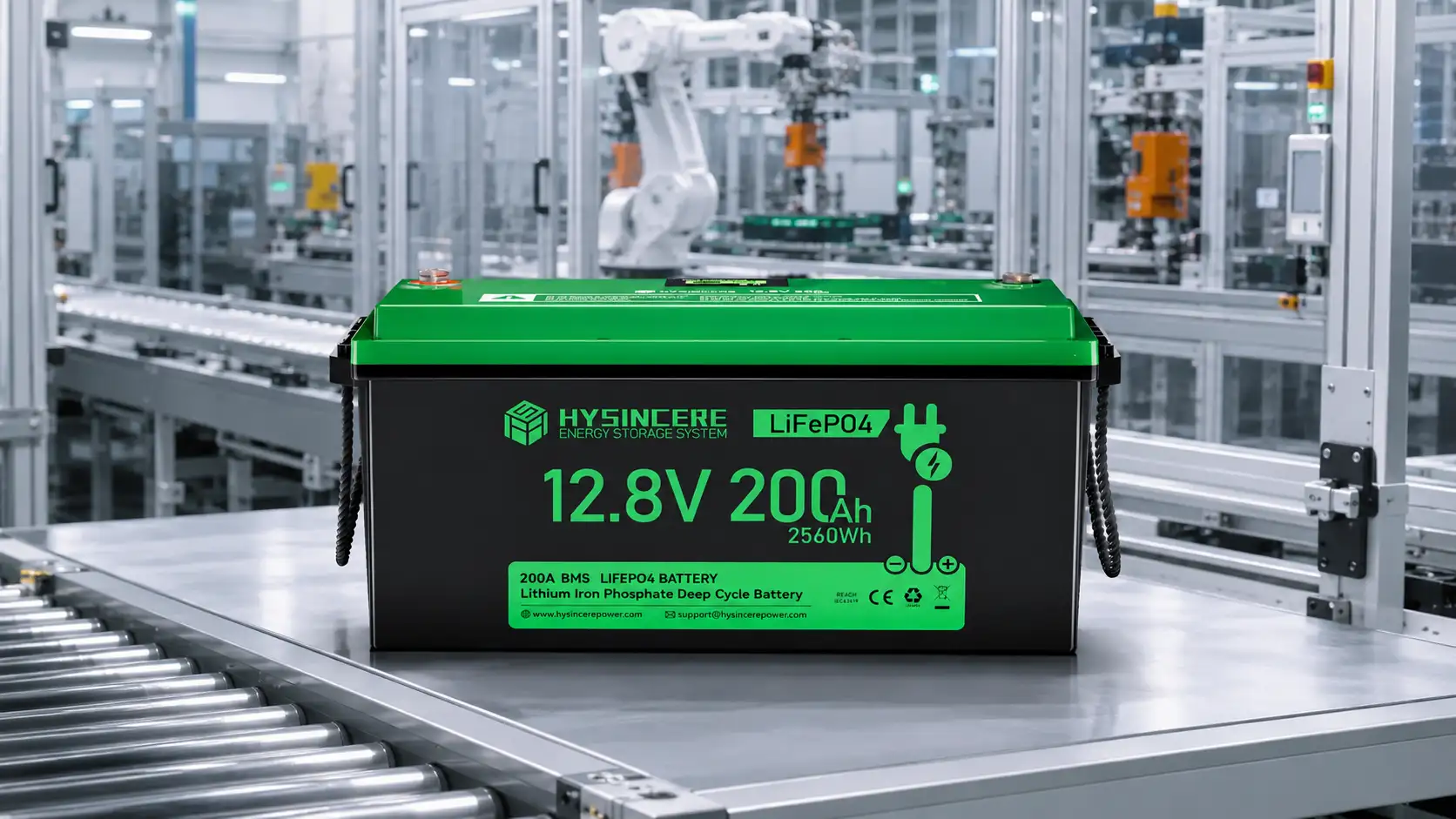
Hysincere develops and manufactures battery packs. Send the application, voltage range, required energy, continuous and peak current, available space, charging method and temperature conditions. Include the expected service life and required test documents. These inputs allow a cell-and-pack evaluation; they do not mean that every chemistry or format is an available or approved Hysincere product.
Discuss Your Battery Project Requirements
Share the application, voltage, capacity, load, charging method, dimensions, temperature, certification, and annual-volume requirements for an initial technical review by Hysincere.
Questions About Lithium Cell Types
Are 18650 and LiFePO4 alternative cell types?
They describe different properties. 18650 is a cylindrical size class, while LiFePO4 is a cathode chemistry. Identify both the format and chemistry, then check the exact electrical ratings and pack requirements.
Does a pouch or LiPo label mean the electrolyte is solid?
No. Packaging and electrolyte formulation are separate characteristics. The LiPo label alone does not establish a fully solid electrolyte or make the cell inherently safer. Check the technical documentation for the model.
Why is LTO different from LFP or NMC?
LTO is lithium titanate, used as an anode material. LFP and NMC are cathode families. An LTO-based cell still has its own cathode, and its voltage, current and charging limits depend on the complete cell design.
This article is intended for technical reference and preliminary project evaluation. Battery compatibility, charging limits, current capability, temperature range, BMS behavior, certifications, and installation requirements vary by model and application. Final selection and system configuration must follow the selected product datasheet, equipment-manufacturer requirements, and system-validation results.