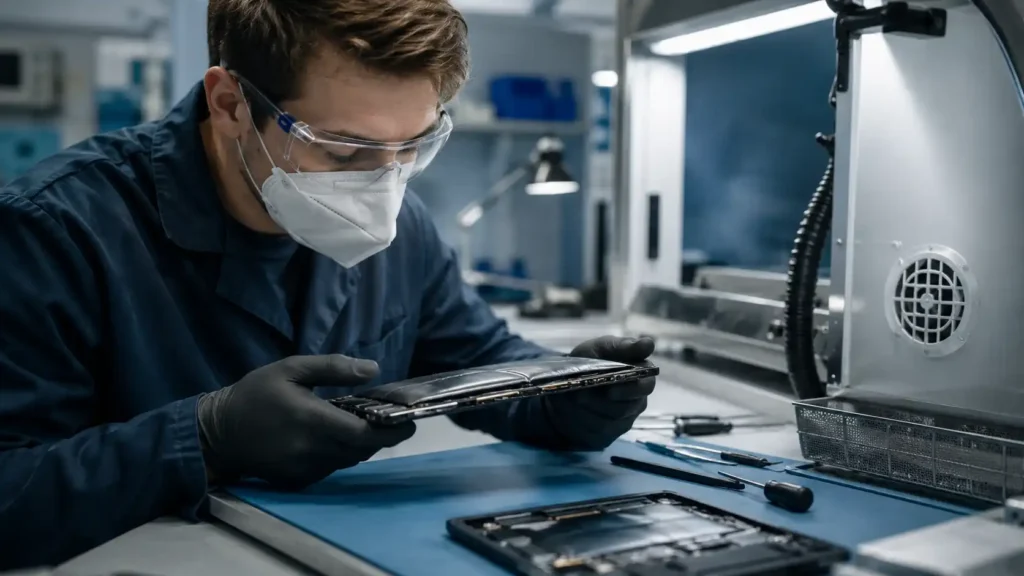
3C lithium-ion batteries (used in Computers, Communications, and Consumer electronics) are everywhere, powering our daily lives. However, their high energy density also means that rigorous safety standards must be maintained. Understanding the potential hazards associated with these batteries is crucial for manufacturers, buyers, and end-users alike.
Here are the four main factors that contribute to the safety hazards of 3C lithium-ion batteries:
1. Active Material Degradation
At excessive temperatures, the active materials within the cathode of a 3C lithium battery can begin to break down. This thermal degradation can lead to internal oxidation, generating significant heat. This excess heat further elevates the internal temperature, creating a dangerous cycle known as thermal runaway. When the temperature crosses a critical threshold, the battery’s potential will trigger severe, unintended chemical reactions with the lithium battery electrolyte, compromising the cell’s reliability and safety.
2. Manufacturing Process Flaws
The preparation and manufacturing of 3C lithium batteries require extreme precision. Every detail—from the purity of raw materials and the uniformity of the electrode slurry to the precision of the coating and slitting—plays a massive role in the final safety factor of the battery.
The entire production process, which includes positive and negative electrode preparation, sizing, cutting, rolling, electrolyte injection, capacity grading, and sealing, must be flawlessly executed. Any inconsistency during these stages, such as microscopic metal burrs during cutting or uneven slurry distribution, can cause internal micro-short circuits down the line.
3. Improper Usage and Overcharging
During the application process, improper handling can introduce severe safety risks. One of the most common hazards is prolonged overcharging. When a lithium battery is constantly overcharged beyond its voltage limit, it can lead to severe gas generation, causing the battery to swell (commonly known as battery bulging). In extreme situations, if the internal temperature exceeds its preset safety value, it can melt the internal separator. This leads to a massive internal short circuit, which may result in the battery igniting or exploding.
4. Inadequate Testing Standards
Non-standard or inadequate testing allows unstable, low-quality rechargeable batteries to enter the market, exponentially increasing safety risks. Rigorous testing protocols are the final gatekeepers of battery safety. Selecting compatible and advanced battery testing equipment, executing standard charge-discharge cycle tests, carefully recording thermal data, and continuously improving the cell’s design based on these results are the keys to ensuring 3C lithium battery safety.
Uncompromising Quality with Hysincere
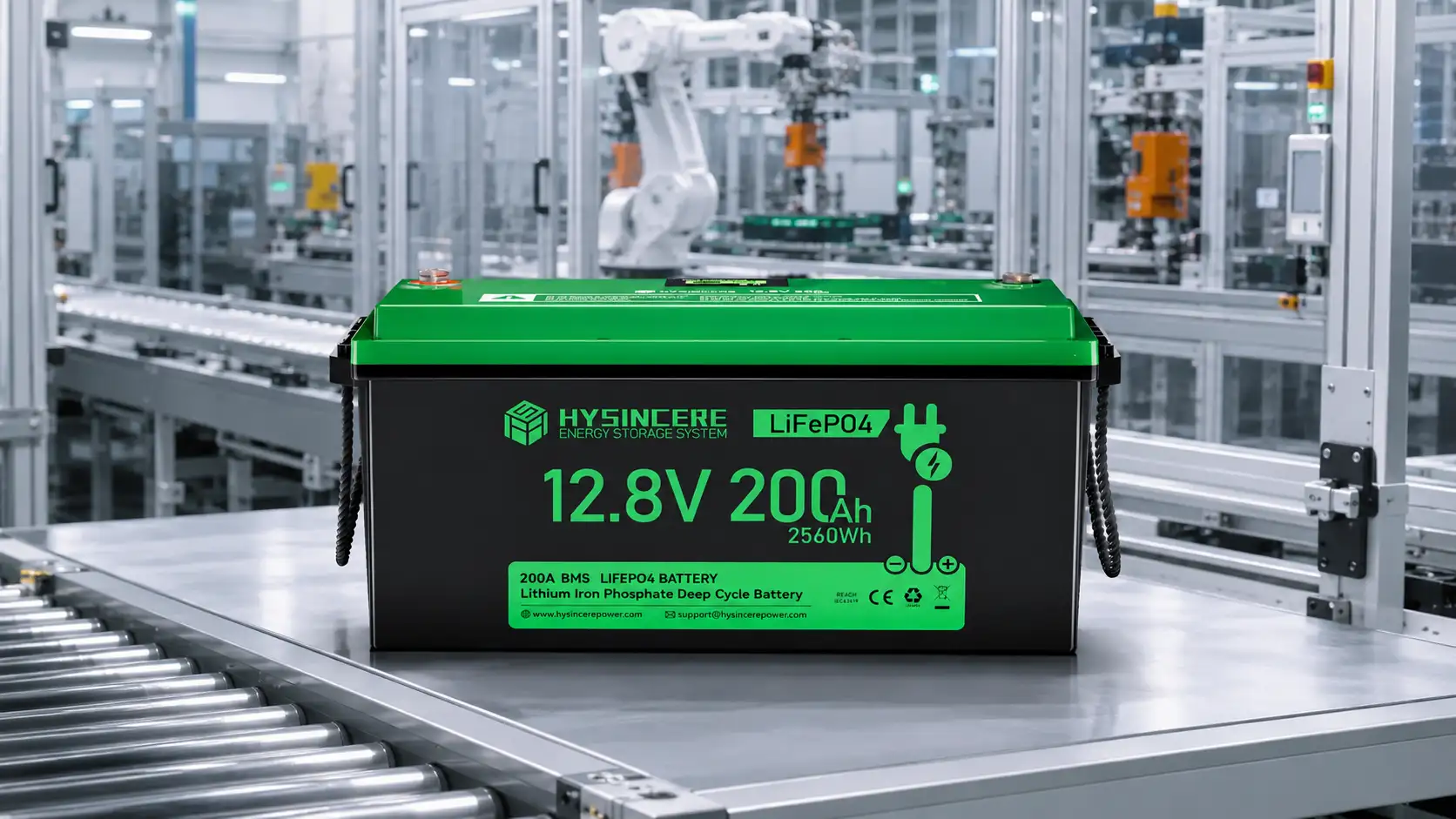
Battery safety starts at the cellular level with superior manufacturing and strict quality control. At Hysincere, we manufacture premium lithium-ion and LiFePO4 battery cells using state-of-the-art automated production lines and rigorous testing standards. Whether you are sourcing cells for consumer electronics, power tools, or industrial energy storage systems, Hysincere ensures that every battery delivered meets the highest global safety and performance certifications.
Discuss Your Battery Project Requirements
Share the application, voltage, capacity, load, charging method, dimensions, temperature, certification, and annual-volume requirements for an initial technical review by Hysincere.
This article is for technical identification and preliminary evaluation. Stop using batteries that leak, overheat, swell, smell abnormal, show damage, or exhibit excessive resistance, and handle them according to manufacturer instructions and local regulations. Do not disassemble, short-circuit, crush, or attempt to repair cells.