
When B2B buyers compare a dry cell vs. a lithium battery, they are often comparing two different concepts. “Dry cell” describes a battery construction in which the electrolyte is immobilized, while “lithium battery” describes a family of battery chemistries. In everyday sourcing, however, dry battery usually means a disposable zinc-carbon or alkaline cell, and lithium battery usually means a rechargeable lithium-ion cell or battery pack.
This guide uses those practical definitions. It explains the differences in rechargeability, voltage, power, safety, lifetime cost, and application fit so procurement and engineering teams can choose the right battery system.
Quick Answer: Which Battery Should You Choose?
Choose a traditional dry cell when the product needs a standardized, replaceable power source for low or intermittent loads, long storage, simple field replacement, and a low initial battery cost. Choose a rechargeable lithium-ion battery system when the product needs repeated charging, higher usable energy, greater power, lower weight, compact packaging, monitoring, or a lower cost per use over frequent cycles.
The correct choice still depends on voltage, load profile, operating temperature, charger compatibility, safety design, transport requirements, and the expected service life of the product. A 1.5V AA alkaline cell and a 3.6V or 3.7V lithium-ion cell are not direct substitutes simply because they look similar.
What Is a Dry Cell Battery?
A dry cell uses an immobilized paste or gel-like electrolyte instead of a freely flowing liquid. This makes the cell portable and resistant to leakage compared with traditional wet cells, although it is not completely leak-proof.
The most familiar dry batteries are primary zinc-carbon and alkaline cells in formats such as AA and AAA. These cells are normally used once and then replaced. The AA or AAA designation describes the physical size; it does not, by itself, identify the chemistry. For a deeper explanation of the construction and reaction process, read What Is a Dry Cell Battery? A Technical Overview.
Typical applications: remote controls, clocks, wireless mice, basic toys, sensors, flashlights, and other products designed around standard replaceable cells.
What Is a Lithium-Ion Battery?
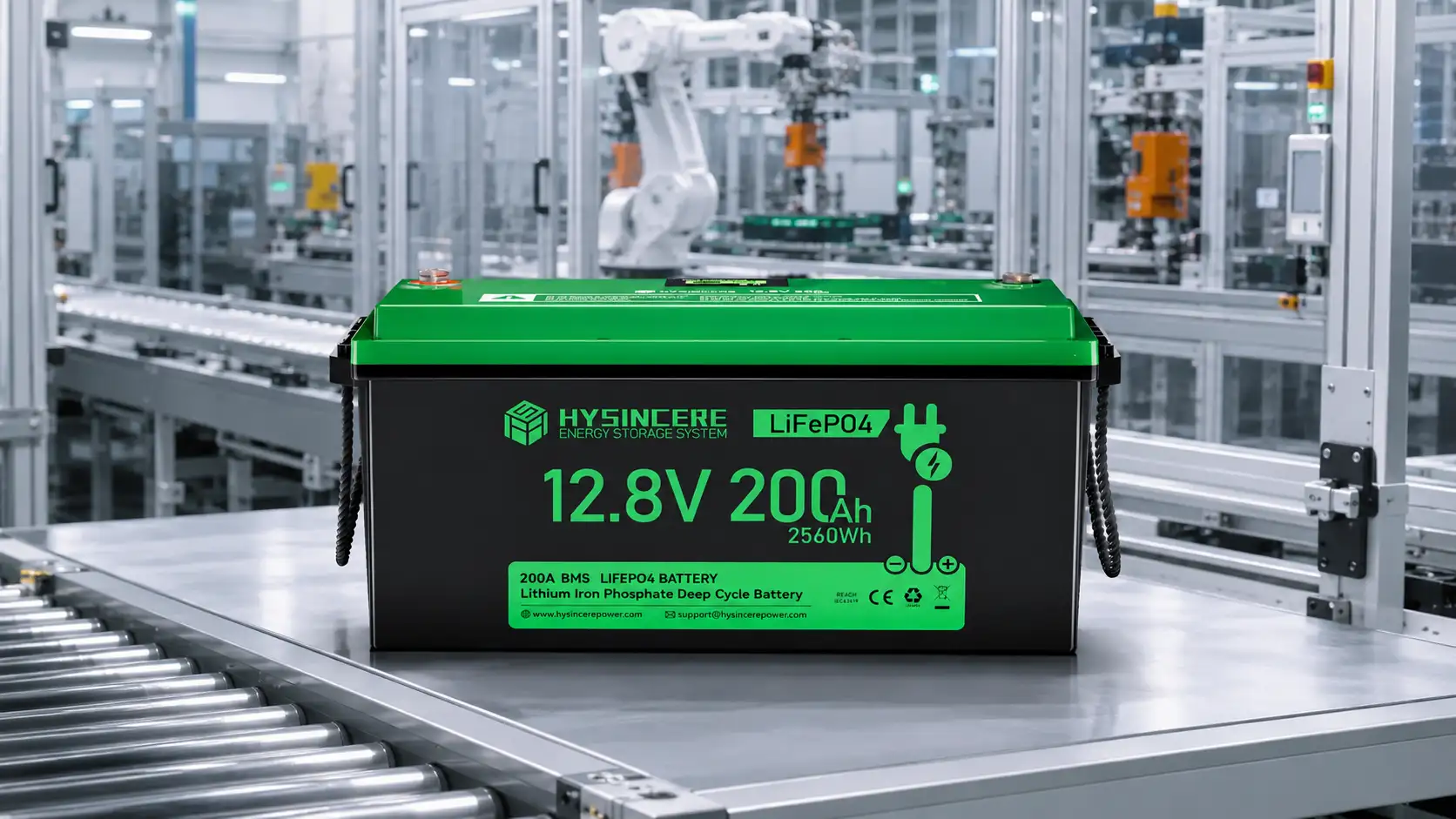
“Lithium battery” is a broad term. Some lithium-metal batteries are primary and non-rechargeable, while lithium-ion batteries are secondary and rechargeable. In this article, lithium battery refers to rechargeable lithium-ion systems, including Lithium Iron Phosphate (LiFePO4 or LFP), which is one type of lithium-ion chemistry.
During charging and discharging, lithium ions move between the positive and negative electrodes. Cells may be cylindrical, prismatic, or pouch-shaped, and each format has different mechanical, thermal, and integration considerations. See our guide to the types of lithium battery cells for a detailed breakdown.
A complete rechargeable battery pack may also include cell interconnections, a protection circuit or Battery Management System (BMS), temperature sensing, communication, a housing, and application-specific connectors. These features must be selected for the actual load and charging system; they are not automatically built into every lithium cell.
Dry Cell vs. Lithium Battery: Comparison Table
| Decision Factor | Traditional Dry Cell (Zinc-Carbon / Alkaline) | Rechargeable Lithium-Ion Battery / Pack |
|---|---|---|
| Typical use model | Primary, single-use cell | Secondary, rechargeable system |
| Typical nominal cell voltage | About 1.5V | About 3.2V for LiFePO4 or 3.6–3.7V for many other Li-ion chemistries |
| Rechargeability | Standard primary cells must not be recharged | Designed for repeated charging with a compatible charger |
| Power and energy | Well suited to low or intermittent loads; performance falls under heavier loads | Generally better suited to higher power, compact packaging, and repeated energy use |
| Protection and control | No BMS; the device controls the load | Pack-level protection or a BMS is normally required for safe system operation |
| Maintenance model | Replace the depleted cell | Recharge the pack; monitor and replace it according to system condition |
| Cost profile | Lower initial battery cost, but repeated replacement cost | Higher initial system cost, with potential for a lower cost per use in frequent-cycle applications |
| Best fit | Standardized, low-drain, replaceable consumer products | Rechargeable electronics, motive power, industrial equipment, and energy storage systems |
Note: The values above are general chemistry-level references. Final performance depends on the exact cell, pack design, load, temperature, state of charge, charging method, and operating limits.
Six Key Differences for B2B Buyers
1. Rechargeability and Service Life
Traditional zinc-carbon and alkaline dry cells are primary batteries. Their active materials are consumed during discharge, so the cells are replaced after depletion. Rechargeable lithium-ion batteries are designed for repeated charge and discharge, but their cycle life is not a universal number. Chemistry, depth of discharge, charge rate, temperature, cell quality, and pack controls all affect usable life.
2. Voltage, Energy, and Power
A traditional alkaline or zinc-carbon cell is typically rated at about 1.5V. Rechargeable lithium-ion chemistries operate at a higher nominal voltage per cell. This can reduce the number of cells required in a pack, but it also means that a lithium cell cannot be inserted into a device designed for 1.5V cells unless the device and voltage conversion system have been engineered for it.
Lithium-ion technology is often selected when a project needs more energy in limited space, lower system weight, or stronger output under load. The U.S. Environmental Protection Agency also identifies high energy density as a major reason lithium-ion batteries are widely used in portable products, vehicles, and electrical energy storage systems.
3. Charging, Protection, and BMS Requirements
A primary dry cell needs no charging circuit. A rechargeable lithium battery requires a charge profile matched to its chemistry, cell count, temperature range, and pack limits. Depending on the design, the protection system may monitor overcharge, over-discharge, overcurrent, short circuit, and temperature.
A bare cell, a protected cell, a module, and a complete battery pack are different procurement items. A BMS improves monitoring and protection, but it does not replace correct cell selection, mechanical design, thermal design, charger compatibility, wiring, fusing, and system validation.
4. Safety and Risk Management
Neither battery type is risk-free. Dry cells may leak, vent, or overheat when short-circuited, mixed with different cell types, installed incorrectly, or left in a device after depletion. Lithium-ion batteries can present a more serious fire risk if they are overcharged, physically damaged, internally shorted, exposed to excessive heat, or used with an incompatible charger.
LiFePO4 is widely chosen where thermal stability and long-term cycling are important, but the chemistry still requires a correctly engineered pack and charging system. Safety should be evaluated at cell, pack, device, and application levels rather than inferred from the chemistry name alone.
5. Temperature and Storage Conditions
Traditional alkaline cells are convenient for products that remain unused for long periods, but output can decline under high loads or cold conditions. Lithium battery performance also varies significantly by chemistry and design. Charging limits are usually narrower than discharge limits, so a cold-environment project may need temperature sensing, charge restriction, insulation, or a self-heating configuration.
Do not approve a battery from a single “operating temperature” value. Confirm separate charging, discharging, and storage ranges under the project’s actual current and thermal conditions.
6. End-of-Life Management and Total Cost
It is misleading to call one battery universally “green.” Disposable dry cells create recurring material and replacement demand, while lithium batteries require energy and mineral inputs to manufacture. Rechargeability can reduce the number of batteries consumed in a frequent-use application, but responsible collection and recycling are still essential.
The U.S. EPA guidance on used lithium-ion batteries states that they should not be placed in household garbage or curbside recycling bins; local requirements and approved collection channels must be followed. For B2B evaluation, compare purchase cost, charger and integration cost, expected cycles, downtime, replacement labor, shipping, service, and end-of-life handling—not unit price alone.
Which Battery Fits Your Application?
| Application | Usually Better Starting Point | Why / What to Verify |
|---|---|---|
| Remote controls, clocks, simple sensors | Traditional dry cell | Standard sizes, low drain, easy replacement |
| Wireless accessories and toys | Depends on duty cycle | Use dry cells for occasional operation; consider lithium for frequent charging or higher loads |
| Portable medical, smart, or industrial devices | Custom lithium-ion pack when rechargeability is required | Verify runtime, enclosure, connector, protection, communication, and compliance needs |
| Power tools and mobile equipment | Rechargeable lithium-ion pack | High-current performance, thermal design, charger, and mechanical protection are critical |
| RV, marine, trolling motor, or lead-acid replacement | LiFePO4 system where compatible | Verify voltage window, peak and continuous current, charger, cabling, protection, and low-temperature operation |
| Solar energy storage and backup power | Rechargeable energy storage battery system | Confirm inverter compatibility, usable energy, communication, installation environment, expansion, and system protection |
For compact electronics and customized device power, explore Hysincere consumer and custom lithium battery packs. For RV, marine, backup, and other deep-cycle projects, review our LiFePO4 lead-acid replacement battery series. For solar storage and residential backup, see our broader energy storage battery solutions.
B2B Battery Sourcing Checklist
Before requesting a quotation or approving a battery, document the following:
- Application and duty cycle: device type, hours per day, charging frequency, standby time, and expected service life.
- Electrical requirements: nominal voltage, voltage window, required energy, continuous current, peak current, and peak duration.
- Charging system: charger or inverter model, charge profile, maximum charge current, and available communication.
- Mechanical integration: maximum dimensions, weight target, mounting direction, enclosure, connector, cable length, and vibration or impact conditions.
- Environment: separate charging, discharging, and storage temperatures; water, dust, salt, humidity, and altitude exposure.
- Protection and communication: required fault limits, BMS functions, display, Bluetooth, CAN, RS485, or other interfaces.
- Compliance and logistics: destination market, product-level standards, documentation, packaging, and the applicable UN Manual of Tests and Criteria, subsection 38.3 transport requirements.
- Total cost: battery, charger, integration, validation, freight, replacement labor, downtime, warranty handling, and recycling.
Hysincere Lithium Battery Solutions
Since 2013, Hysincere has focused on lithium battery R&D, pack design, assembly, testing, sales, and service for energy storage, motive power, and customized device applications. Learn more about our engineering and manufacturing approach on the About Hysincere page.
Battery specifications, BMS functions, communication, documentation, and certifications are model- and market-specific. To discuss a project, contact Hysincere with your voltage, capacity or runtime, current, size, temperature, charging system, target market, and estimated order requirements. Our team can then evaluate the appropriate cell chemistry, pack architecture, and validation path.
Discuss Your Battery Project Requirements
Share the application, voltage, capacity, load, charging method, dimensions, temperature, certification, and annual-volume requirements for an initial technical review by Hysincere.
Dry Batteries vs. Lithium Batteries: A Comprehensive B2B Guide FAQ
Is a dry battery the same as an alkaline battery?
No. “Dry battery” describes a cell with an immobilized electrolyte. Alkaline is one chemistry commonly produced as a dry cell. Zinc-carbon cells are also dry cells, and the term does not identify the chemistry by itself.
Are all lithium batteries rechargeable?
No. Primary lithium-metal batteries are non-rechargeable. Lithium-ion batteries, including LiFePO4, are rechargeable when used with a compatible charging and protection system.
Can a 1.5V dry cell be replaced directly with a 3.7V lithium-ion cell?
Usually not. The voltage, discharge behavior, charging requirements, dimensions, terminals, and protection may be different. A substitution should only be made when the device and battery system are explicitly designed for it.
Which lasts longer: a dry battery or a lithium battery?
It depends on what “lasts longer” means. A primary dry cell may offer convenient long-term storage and one discharge period. A rechargeable lithium-ion pack can deliver repeated use across many charge cycles. Runtime and total service life depend on the exact product, load, temperature, storage condition, and charge strategy.
Which battery is better for solar energy storage?
A rechargeable battery system is required for regular solar energy storage. LiFePO4 is a common choice because it can support deep-cycle applications, but the battery must be matched to the inverter, charger, system voltage, required energy, communication, installation environment, and local compliance requirements.
This article is intended for technical reference and preliminary project evaluation. Battery compatibility, charging limits, current capability, temperature range, BMS behavior, certifications, and installation requirements vary by model and application. Final selection and system configuration must follow the selected product datasheet, equipment-manufacturer requirements, and system-validation results.