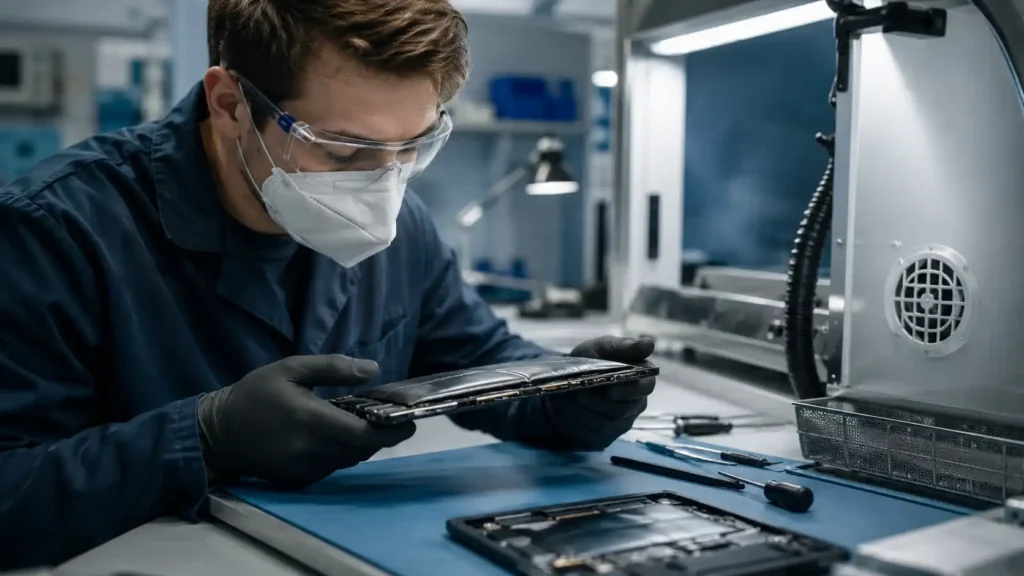
In this article, “3C” means computers, communications and consumer electronics—not a 3 C discharge rate. For batteries used in these devices, assess the specific cell, pack protection and installation together. High energy density makes control of heat, charging and physical damage important.
The following four areas help identify risks during product development and procurement.
1. Active Material Degradation
Excessive heat or internal faults can trigger unwanted reactions within the electrodes and electrolyte. If heat generation exceeds heat removal, the cell can enter thermal runaway, with possible gas release, smoke or fire. The sequence depends on chemistry, construction and operating state; one universal temperature threshold does not describe every device battery.
2. Manufacturing Process Flaws
Material quality, clean processing and consistent electrodes matter, but not every defect can be identified from appearance. Ask for specifications, traceability and test records tied to the actual cell and pack rather than relying on general claims about production equipment.
Contamination, metal burrs, damaged separators or unsuitable connections can contribute to electrical faults. Pack assembly and installation also matter: cell screening alone does not validate contacts, protection electronics or the mechanical loads imposed by the device.
3. Improper Usage and Overcharging
Overcharging, short circuits, excessive heat and mechanical damage can create hazardous conditions. Use the charging method approved for the specific battery and stay within its limits. Stop using or charging a battery that is swollen, leaking, damaged, unusually hot or giving off an unusual smell. Follow the manufacturer’s safety instructions; do not open, crush or attempt to repair the cell.
4. Inadequate Testing Standards
Capacity and cycle testing alone do not cover every safety requirement. Check which reports apply to the cell, pack, device and intended market. Electrical, thermal and mechanical tests must represent the intended use. A certificate for another model is not approval of the project, and component or supplier changes may require reassessment.
Discuss Device Battery Requirements with Hysincere
Provide Hysincere with the device application, voltage, energy and current requirements, installation space, charging method and temperature range. Also specify the target market and required test documents. Available configurations and certifications must be confirmed for the exact model; this article does not imply that every battery carries every market approval.
Discuss Your Battery Project Requirements
Share the application, voltage, capacity, load, charging method, dimensions, temperature, certification, and annual-volume requirements for an initial technical review by Hysincere.
This article is for technical identification and preliminary evaluation. Stop using batteries that leak, overheat, swell, smell abnormal, show damage, or exhibit excessive resistance, and handle them according to manufacturer instructions and local regulations. Do not disassemble, short-circuit, crush, or attempt to repair cells.