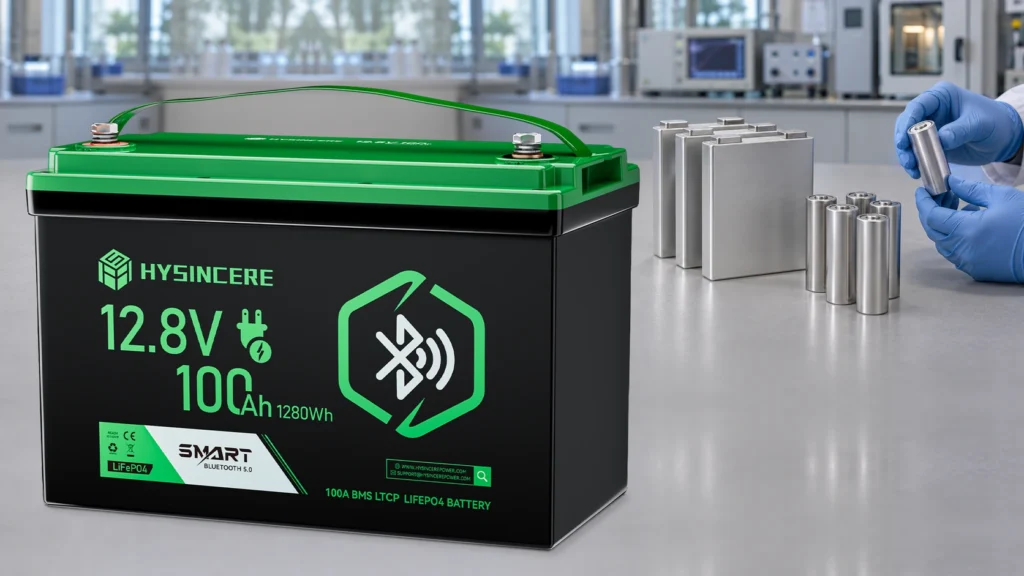
LiFePO4 vs ternary lithium battery, in short: LiFePO4 (LFP) is the more thermally stable, longer-lasting and lower-cost chemistry, while ternary lithium (NMC or NCA) stores more energy in less weight and space. That’s why LFP now dominates energy storage, RV, marine and lead-acid replacement batteries, and ternary cells remain common where every kilogram and centimeter counts, such as long-range EVs, power tools and portable electronics.
The chemistry name is only a starting point. Choose between real products by comparing usable energy, current, temperature limits and service life. The table and five checks below show how.
| Property | LiFePO4 (LFP) | Ternary lithium (NMC / NCA) |
|---|---|---|
| Cell nominal voltage | 3.2V | About 3.6–3.7V |
| Typical full-charge voltage per cell | About 3.65V | About 4.2V |
| Thermal stability | Higher: thermal runaway starts later and is milder | Lower: needs tighter thermal and protection design |
| Energy density | Lower | Higher, by weight and volume |
| Cycle life | Typically longer in comparable tests | Typically shorter; depends strongly on design and use |
| Raw materials | No nickel or cobalt | Nickel, plus cobalt and/or manganese or aluminum |
| Average pack price, 2025 | $81/kWh | $128/kWh (NMC) |
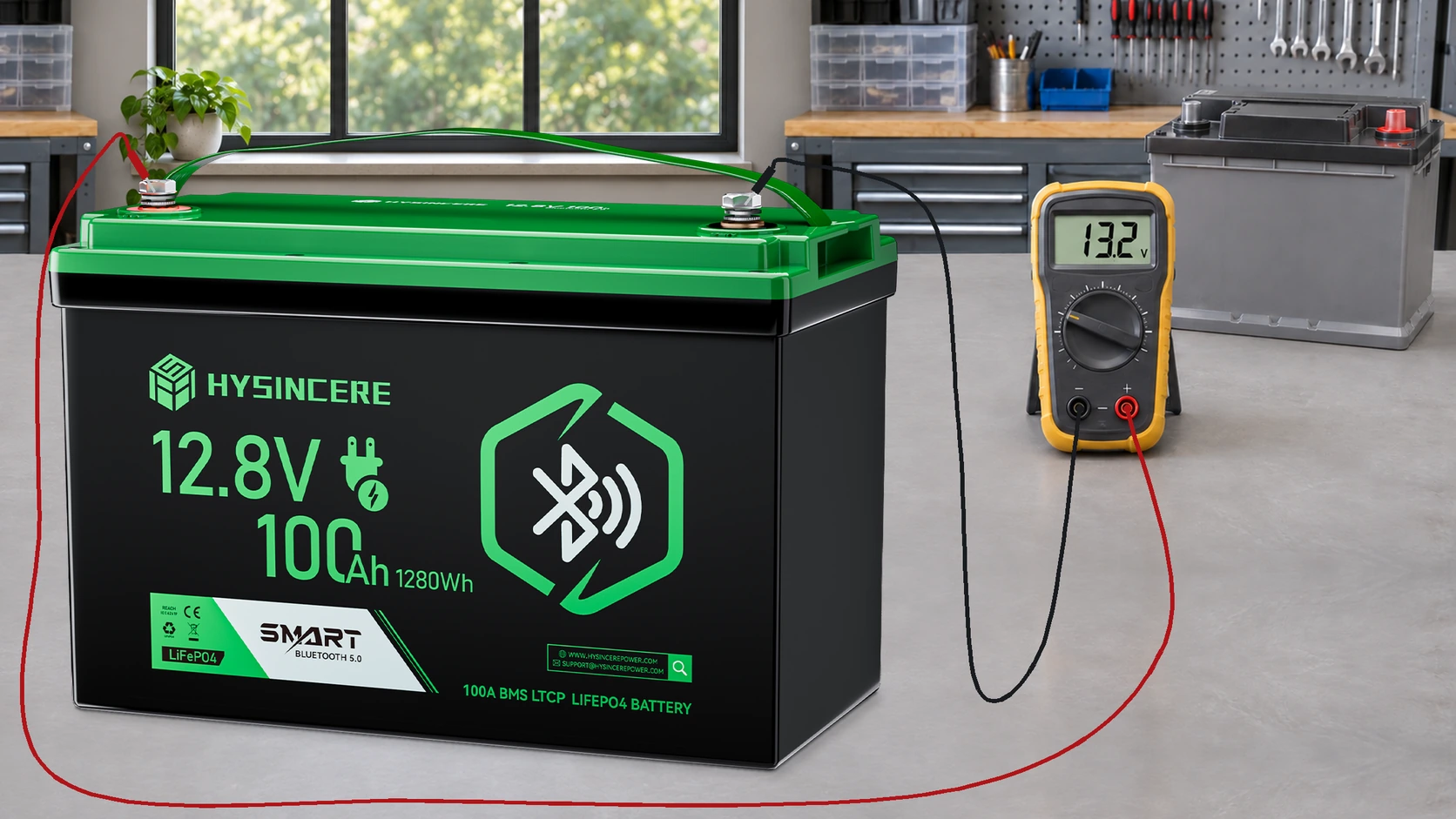
| 12V lead-acid replacement | 4 cells in series = 12.8V, a natural fit | 3 or 4 cells give 11.1V or 14.8V, a poor fit |
| Voltage curve | Very flat; state of charge is harder to read from voltage | Sloping; voltage tracks charge level more clearly |
General chemistry characteristics; individual products vary. Pack prices: BloombergNEF battery price survey, December 2025 (global averages, not quotes).
1. Safety and Thermal Stability
LFP’s iron-phosphate structure holds on to its oxygen more tightly than nickel-rich cathodes, so it reaches thermal runaway at a higher temperature and reacts less violently. That’s the main reason it’s preferred for batteries that sit in homes, vehicles and cabinets for years.
It doesn’t make LFP immune. Every lithium-ion cell contains flammable electrolyte, and internal defects, short circuits, overcharging, crushing or external heat can still cause a fire. Cell construction, state of charge, manufacturing quality and pack protection all affect the outcome, so review product-specific safety tests for both chemistries. See the main lithium-ion battery hazards for what to check.
2. Cycle Life and Longevity
LFP usually lasts more cycles than NMC or NCA in comparable tests, but no fixed number represents every cell. A cycle-life figure is only meaningful with its conditions: temperature, charge and discharge rate, depth of discharge, cut-off voltages and end-of-life point (for example, 80% of initial capacity). Also check whether it was measured on a cell or a full pack, and whether the test was completed or extrapolated.
Calendar aging matters too. Both chemistries lose capacity while stored, faster when kept hot or fully charged. Define the energy and power you still need at the end of the service period, and compare products against that. More in how long LiFePO4 batteries last.
3. Energy Density and Volume
Ternary cells store more energy per kilogram and per liter, which matters in EVs, drones, power tools and portable devices. For stationary storage, RVs and boats, the extra weight of LFP is usually acceptable in exchange for safety and life.
Don’t compare amp-hours alone when voltages differ. A 3.2V LFP cell and a 3.7V NMC cell with the same Ah rating store different watt-hours. Compare usable Wh, complete pack weight and installed dimensions, and don’t assume every LFP pack is larger than every ternary alternative.
4. Low-Temperature Performance
Cold reduces available energy, voltage and current in both chemistries. A single retained-capacity figure at −20°C doesn’t describe every product, so compare curves under your actual load. Charging is the stricter limit: standard LFP batteries shouldn’t be charged below 0°C, and ternary cells have similar restrictions. Hysincere’s LF12100N-B, for example, discharges from −20°C to 60°C but charges from 0°C to 55°C, while the self-heating LF12100M-BJ can charge from −20°C. See LiFePO4 cold weather charging.
5. Production Cost
LFP avoids nickel and cobalt, which lowers material cost and supply risk. BloombergNEF’s 2025 survey put average LFP packs at $81/kWh against $128/kWh for NMC, and the IEA reports LFP in over 90% of new stationary storage installed in 2025. These are high-volume averages; a finished pack’s price also depends on cell grade, BMS, enclosure, testing, order volume and expected life. Compare current quotes and lifetime cost per delivered kWh rather than assuming a fixed saving. Our guide on how to reduce battery costs shows the calculation.
Compare Battery Options with Hysincere
Hysincere designs and assembles LiFePO4 battery packs from selected purchased cells, along with lithium-ion packs for consumer devices. Share your voltage window, load profile, usable-energy requirement, installation space, temperature range and service-life target, and we’ll suggest pack options to review. Suitability and available configurations are confirmed against each product’s data and your system requirements. For a broader view of where each chemistry is heading, see lithium battery industry trends.
Discuss Your Battery Project Requirements
Share the application, voltage, capacity, load, charging method, dimensions, temperature, certification, and annual-volume requirements for an initial technical review by Hysincere.
LiFePO4 vs ternary lithium: FAQ
What is the difference between LiFePO4 and ternary lithium batteries?
LiFePO4 (LFP) uses an iron-phosphate cathode: it is more thermally stable, usually lasts more cycles and costs less. Ternary lithium (NMC or NCA) uses nickel-based cathodes and stores more energy by weight and volume.
Is LiFePO4 safer than NMC?
LFP is more thermally stable: thermal runaway starts at a higher temperature and is less violent. It is not immune; cell quality, BMS protection, fusing and installation still matter for both chemistries.
Which lasts longer, LiFePO4 or ternary lithium?
LFP usually achieves more cycles in comparable tests. Compare cycle-life figures only under the same temperature, charge and discharge rates, depth of discharge and end-of-life criterion.
Why is LiFePO4 used to replace 12V lead-acid batteries?
Four LFP cells in series give 12.8V nominal and charge at about 14.2–14.6V, which fits 12V systems. Three or four ternary cells give about 11.1V or 14.8V, which doesn't match as well.
How should I compare batteries with the same Ah rating?
Compare watt-hours, not amp-hours, because LFP and ternary cells have different voltages. Then compare usable energy, current limits, pack weight, dimensions and temperature ranges.
This article is intended for technical reference and preliminary project evaluation. Battery compatibility, charging limits, current capability, temperature range, BMS behavior, certifications, and installation requirements vary by model and application. Final selection and system configuration must follow the selected product datasheet, equipment-manufacturer requirements, and system-validation results.